
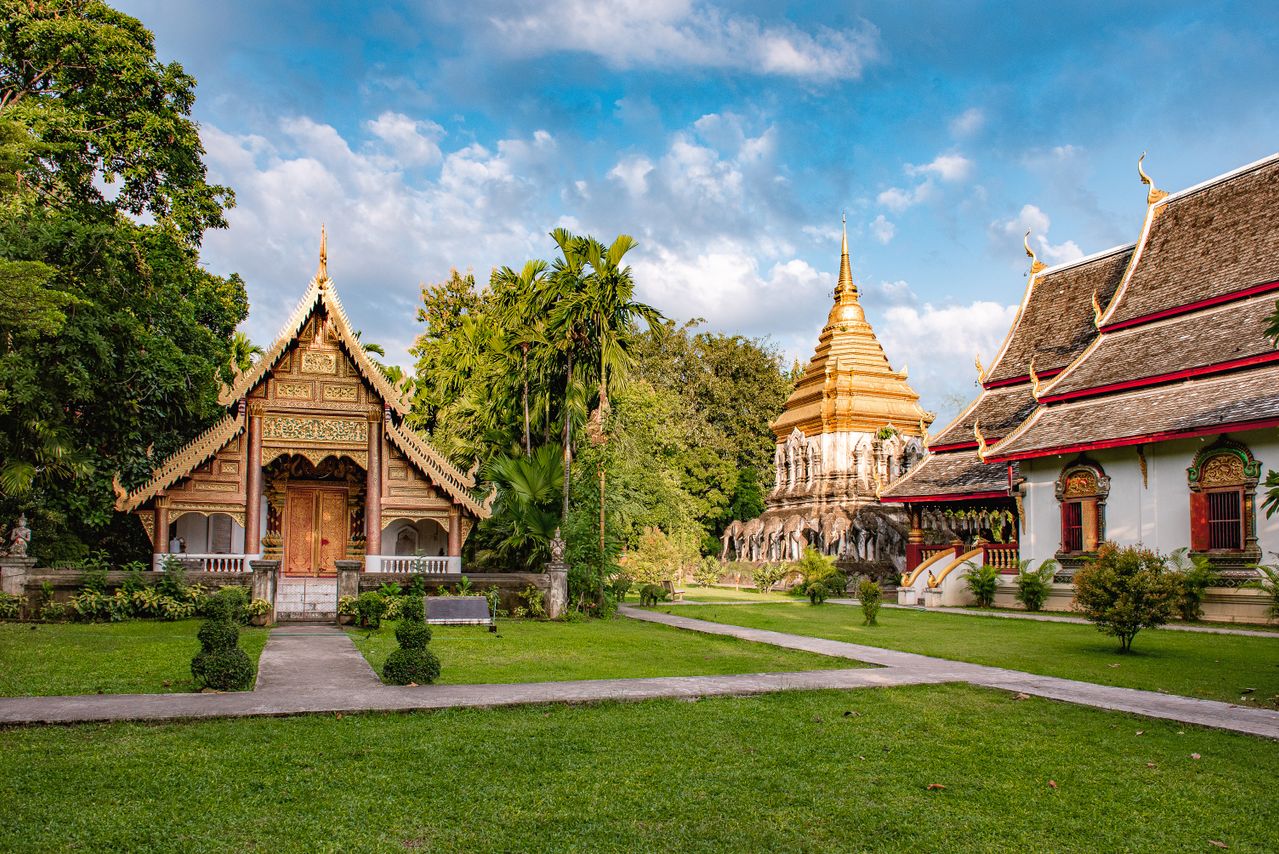
The road from Chiang Mai to Pai is the kind of drive that looks innocent on Google Maps and then immediately reminds you that mountains have a sense of humor.
The distance isn’t enormous. The famous route follows Highway 1095, and Pai is roughly 130–135 kilometers from Chiang Mai depending on where you start and which route you follow. The problem isn’t the distance. It’s the hundreds of bends, steep sections, mountain traffic and sudden changes in weather.
I’ve driven northern Thailand enough to know that this isn’t a route I’d rush.
The best part isn’t simply arriving in Pai. It’s stopping at waterfalls, viewpoints, coffee shops and little roadside places where the mountains suddenly open up in front of you.
Thailand’s Tourism Authority also identifies Highway 1095 as the main road connecting Chiang Mai and Pai, with the journey continuing through the mountainous landscape toward Mae Hong Son.
If you’re planning to drive it yourself, here’s the route I’d take, where I’d stop, and the mistakes I’d avoid.
Chiang Mai to Pai Road Trip at a Glance
| Detail | Recommendation |
|---|---|
| Main route | Highway 1095 |
| Distance | About 130–135 km |
| Driving time without stops | Roughly 3–4 hours |
| Realistic road-trip time | 6–8 hours |
| Best departure | Around 6:30–7:00 AM |
| Best season | November–February |
| Vehicle | Small automatic car or experienced motorbike rider |
| Fuel | Fill up in Chiang Mai |
| Major stops | Mae Sa/Mae Malai area, Mok Fa Waterfall, Mae Taeng, Pai Canyon |
| Main hazard | Constant curves and mountain traffic |
I wouldn’t treat the journey as a race.
Leave Chiang Mai early, stop several times, arrive in Pai during the afternoon, check into your hotel and spend the evening wandering around town.
That’s much more enjoyable than trying to squeeze everything into a few hours.
Before You Leave Chiang Mai
The first thing I’d do is fill the fuel tank.
There are fuel stations along the route, but I don’t like starting a mountain drive with a half-empty tank simply because I was too lazy to stop in Chiang Mai.
I’d also download offline Google Maps.
Mobile coverage is generally available along much of the route, but mountain roads aren’t the place to discover that your navigation app suddenly needs an internet connection.
My pre-drive checklist
- Full tank of fuel
- Driving license and required documents
- Phone holder
- Offline map
- Power bank
- Sunglasses
- Water
- Light jacket
- Rain jacket during wet season
- Cash
- Basic first-aid supplies
- Check tire pressure
- Check brakes
And if you’re renting a motorbike, photograph the bike from every angle before leaving the rental shop.
It takes two minutes.
It can save a very unpleasant argument later.
The Road: Highway 1095
Once you leave Chiang Mai, the road gradually becomes more rural.
You’ll pass through areas around Mae Rim and Mae Taeng, with the scenery becoming increasingly mountainous.
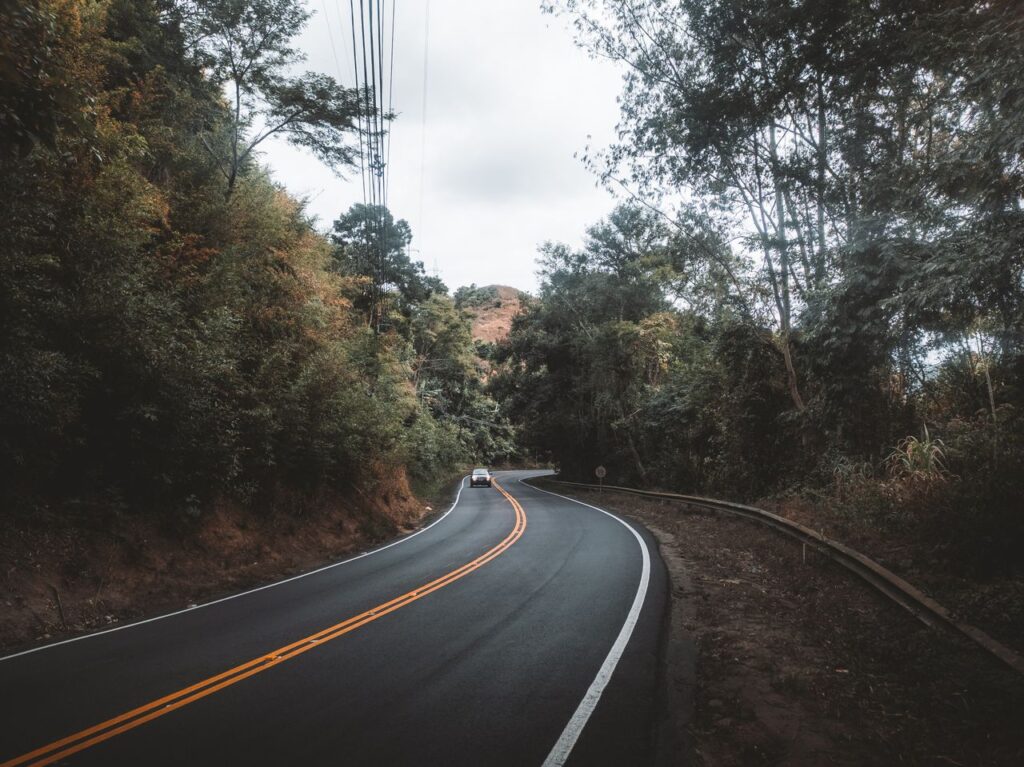
The real personality of the journey appears once the road begins climbing and twisting.
This is where I stop thinking about arrival time.
The road isn’t difficult because it’s poorly paved. In many sections, it’s perfectly driveable. It’s difficult because the route contains continuous curves and elevation changes.
If you’re prone to motion sickness, take that seriously.
A passenger who feels sick after an hour of constant bends isn’t going to enjoy the rest of the trip.
Stop One: Mok Fa Waterfall
One of my favorite practical stops along the route is Mok Fa Waterfall, in the Mae Taeng area.
It’s useful for two reasons.
First, it’s genuinely worth seeing.
Second, it’s exactly the kind of stop that breaks up the drive before the road becomes even more winding.
The waterfall is located within Doi Suthep–Pui National Park’s broader northern region, and the surrounding forest provides a welcome change from sitting in a car.
I’d check current park operating conditions before leaving, particularly during periods when national parks temporarily close attractions or restrict access. Thailand’s Department of National Parks publishes annual closure information, and the 2026 schedule was updated by Tourism Thailand in February 2026.
Give yourself:
45–90 minutes
Don’t turn this into a rushed bathroom stop.
Walk around, stretch your legs and enjoy the cooler forest air.
Stop Two: Mae Taeng for Food and Coffee
After Mok Fa, I’d look for somewhere local to eat rather than continuing nonstop.
Northern Thailand is full of small roadside restaurants where you can get a bowl of noodles, rice with pork or chicken, or a simple stir-fry without turning lunch into an expensive tourist experience.
I usually prefer a basic restaurant where there are several local cars parked outside.
That’s my unofficial restaurant-review system.
If the place is busy with Thai drivers, I’m interested.
If it’s completely empty at lunchtime, I keep looking.
Have coffee if you need it, but don’t go overboard.
You still have the twistiest part of the drive ahead.
Stop Three: Mountain Viewpoints
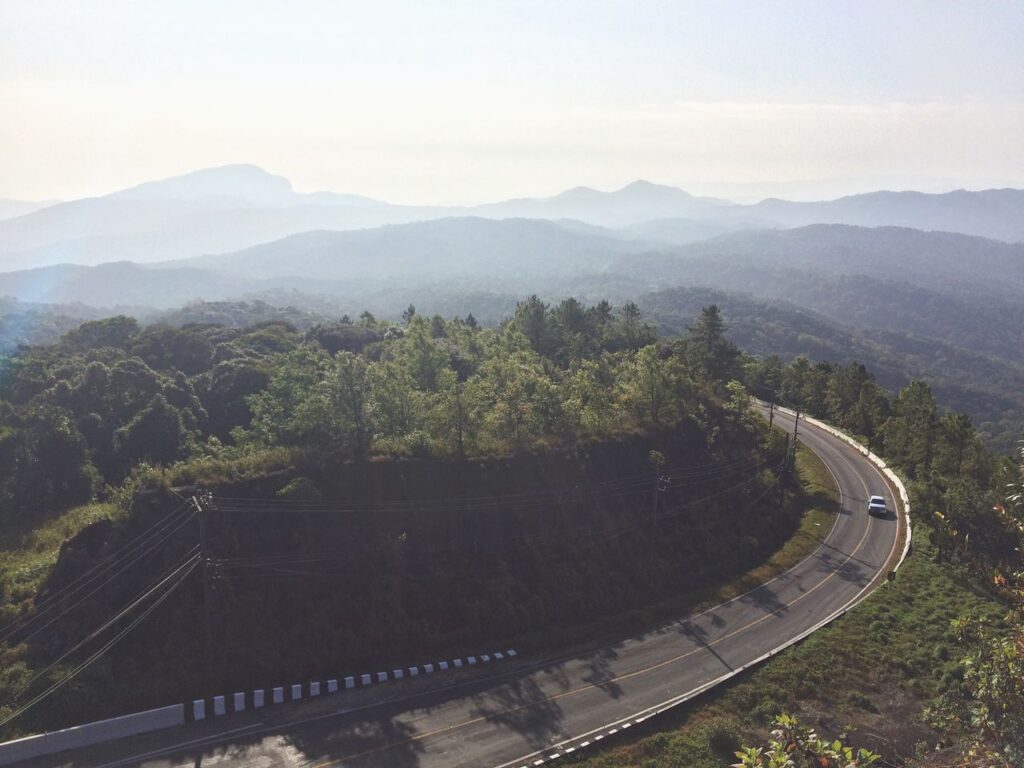
After Mae Taeng, the road becomes much more interesting.
You’ll climb higher, the temperature can drop slightly, and the views become much wider.
This is where you should resist the temptation to stop on a random bend just because the view looks incredible.
I’ve seen travelers pull partially onto narrow shoulders, turn around in the road, or park in places where approaching drivers have almost no warning.
Don’t do it.
Use designated pull-offs and established viewpoints.
When the road straightens and you see a safe parking area, that’s when you stop.
Take the photograph.
Then get back on the road.
The Curves Are the Experience
At some point, you’ll start noticing the bends.
Then you’ll notice another bend.
Then another.
And then you’ll realize you’ve been driving around corners for what feels like the last hour.
This is the famous part of the Chiang Mai–Pai road.
If you’re driving a car, stay patient.
If you’re on a motorbike, be even more conservative.
My driving rules are simple:
- Stay on your side of the road.
- Don’t cut corners.
- Don’t overtake blindly.
- Use your horn when appropriate on tight bends.
- Keep plenty of distance from vehicles ahead.
- Slow down before the corner, not halfway through it.
- Don’t let faster traffic pressure you into speeding.
- Expect minibuses and trucks.
- Expect animals and pedestrians near villages.
The road is much more enjoyable when you’re not trying to prove something.
Motorbike or Car?
This is probably the most important decision you’ll make.
Motorbike
A motorbike gives you the classic Pai road-trip feeling.
You feel the temperature change.
You smell the forest.
You can stop easily.
And, honestly, it looks fantastic in photographs.
But I only recommend it if you’re already an experienced motorcycle rider.
This is not the road where I’d learn how to ride a scooter.
The combination of curves, downhill sections, traffic and inexperienced tourists has caused plenty of accidents over the years.
If you’ve only ridden a scooter around a flat Thai beach town, that does not automatically prepare you for Highway 1095.
Car
For most travelers, I’d choose a small automatic car.
You’ll have air conditioning, luggage space and considerably more protection from rain.
A car also makes more sense if you’re traveling with two or three people.
My ideal setup is:
Small automatic + experienced driver + early departure.
What About the Famous 762 Curves?
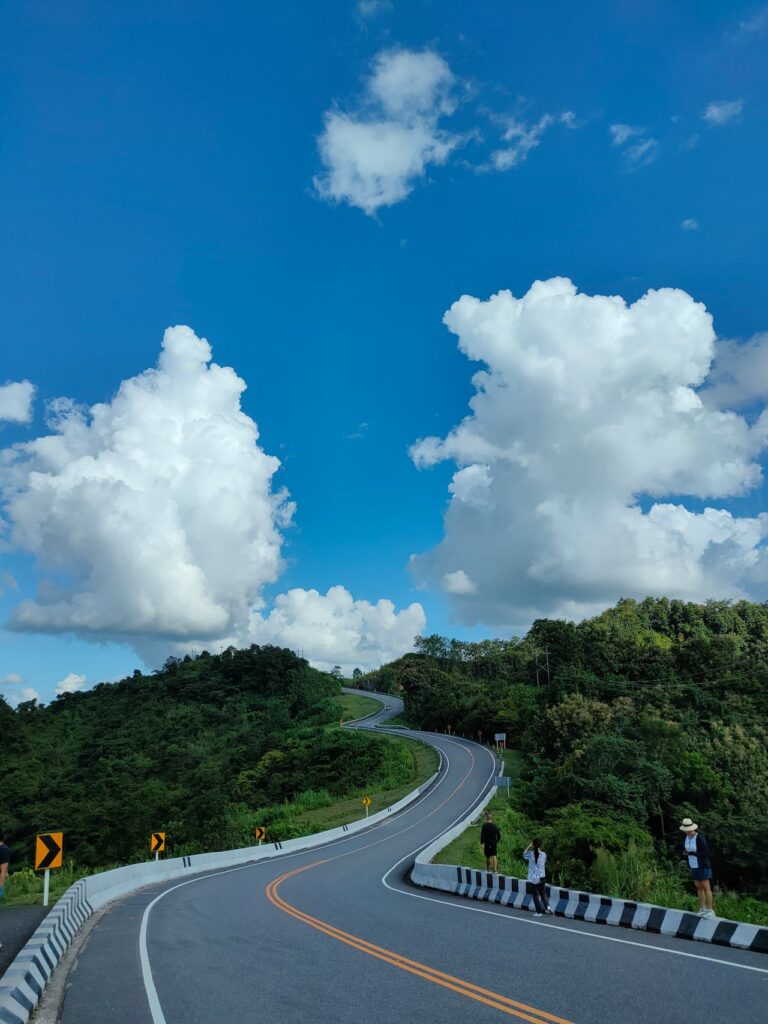
You’ll often hear the Chiang Mai–Pai road described as having 762 curves.
Whether you count every bend exactly that way isn’t particularly important.
The practical lesson is simple:
There are a lot of them.
Don’t let the number become a challenge.
Your objective isn’t to complete the road as quickly as possible.
It’s to arrive in Pai with everyone feeling good.
Arriving in Pai
The landscape opens up as you approach Pai.
Suddenly, after hours of mountain roads, you’re looking at a much broader valley.
That’s when the driving becomes easier.
Pai itself is compact and easy to explore.
After checking into your accommodation, I recommend parking the vehicle and walking.
The town’s evening atmosphere is one of the best parts of visiting.
You’ll find:
- Street food
- Small cafés
- Live music
- Handmade products
- Smoothies
- Northern Thai dishes
- International restaurants
- Night-market stalls
After sitting in a car for several hours, walking around Pai feels excellent.
Stop Four: Pai Canyon
If you still have energy after arriving, Pai Canyon is one place I’d prioritize.
It’s about 7 kilometers south of Pai, directly along Highway 1095. Tourism Thailand places it around kilometer marker 90 and notes that the entrance is clearly marked, with parking available.
This is a great sunset location.
The landscape consists of narrow ridges and eroded earth formations with views across the surrounding mountains.
My advice
Arrive before sunset rather than five minutes before it.
You want time to walk to a good viewpoint.
The ridges can become narrow, and some sections have steep drops.
Wear proper shoes.
Don’t attempt a dramatic Instagram pose on a tiny ridge after dark.
No photograph is worth that.
Tourism Thailand specifically recommends morning visits if you want a quieter experience, while the western-facing mountain views make the area particularly attractive around sunset.
Stop Five: Tha Pai Hot Springs
If you’re staying overnight, Tha Pai Hot Springs is another worthwhile stop.
The hot springs are located near Pai within a protected natural area.
The surrounding forest makes the experience particularly pleasant when the weather is cool.
Tourism Thailand describes the hot springs as a popular attraction near Pai and also notes that Sai Ngam Hot Spring is a quieter alternative farther into the forest.
One important point
Don’t assume the water temperature will feel refreshing just because you’re tired.
The spring water can be genuinely hot.
I’d visit earlier in the morning when temperatures are more comfortable.
An Alternative: Sai Ngam Hot Spring
If you have an extra morning, I’d consider Sai Ngam Hot Spring instead of Tha Pai.
It’s farther from central Pai and requires driving deeper into the surrounding area.
Tourism Thailand describes it as a more rustic hot-spring experience with forest surroundings. The listed access information includes an additional ฿20 fee for the spring area, with lockers available for an additional charge.
This is the kind of place I prefer when I have enough time.
It’s less about ticking a famous attraction off the list and more about sitting quietly in nature.
A Better Chiang Mai–Pai Road Trip Schedule
If I were planning this trip myself, I’d do it like this.
6:30 AM — Leave Chiang Mai
Grab breakfast and coffee before departure.
7:30–8:00 AM — Mae Rim/Mae Taeng area
Fuel check and short break.
9:00 AM — Mok Fa Waterfall
Walk around and stretch your legs.
10:30 AM — Continue toward the mountains
Take your time.
12:00 PM — Lunch
Choose a local restaurant around Mae Taeng or farther along the route.
1:00–2:30 PM — Mountain drive
Stop at safe viewpoints.
3:00–4:00 PM — Arrive in Pai
Check into your hotel.
4:30 PM — Pai Canyon
Walk around and stay for the changing light.
Evening — Pai Walking Street
Dinner, drinks and wandering.
This is much better than trying to visit every attraction between Chiang Mai and Pai on the same day.
If You Have Two Days
Two days is much better.
Day One
Chiang Mai → Mok Fa → mountain viewpoints → Pai
Stay overnight.
Day Two
Pai Canyon → Tha Pai Hot Springs → Pai town → return to Chiang Mai
Or stay a second night and return the following morning.
That gives you time to stop spontaneously.
And spontaneous stops are exactly what make this road trip enjoyable.
When Is the Best Time to Drive?
I’d choose November through February if possible.
Northern Thailand is generally cooler during this period, making the drive much more comfortable.
December and January can be surprisingly cool in the mountains, especially early in the morning.
Bring a light jacket.
You may laugh when you leave Chiang Mai wearing it.
You won’t laugh when you’re standing at a mountain viewpoint at 7:30 AM.
March–April
This can be hot and may also bring seasonal haze and air-quality issues in northern Thailand.
Check the air-quality forecast before planning an outdoor-heavy trip.
Rainy season
The mountains can look spectacular when everything is green, but wet roads require significantly more caution.
Slow down.
Don’t make a mountain road trip into a race against a thunderstorm.
Don’t Forget About the Return Journey
This is an easy mistake.
People arrive in Pai, spend the entire day exploring, stay out late and then decide they’ll simply drive back to Chiang Mai the next morning.
That’s fine.
What I wouldn’t recommend is:
Pai nightlife until midnight → wake up at 6 AM → drive the mountain road while exhausted.
If you’re tired, stay another night.
The accommodation costs less than a mistake on Highway 1095.
Essential Safety Advice
Before starting the drive, I’d save these rules in my head.
If you’re driving a car
- Keep your speed moderate.
- Use low gears on steep descents when appropriate.
- Don’t ride the brakes continuously downhill.
- Watch for motorcycles.
- Expect sudden stops.
- Don’t drive when sleepy.
If you’re riding a motorcycle
- Wear a proper helmet.
- Wear covered shoes.
- Avoid riding in heavy rain.
- Don’t carry too much luggage.
- Don’t ride after drinking.
- Don’t attempt the route if you’re inexperienced.
- Take breaks.
And if you feel sick from the curves, stop.
There’s no prize for completing Highway 1095 without vomiting.
What I’d Pack
My road-trip bag is simple.
- Water
- Sunscreen
- Sunglasses
- Light jacket
- Rain jacket
- Phone power bank
- Offline maps
- Small first-aid kit
- Cash
- Driving documents
- Camera
- Motion-sickness medication if needed
I also keep a small towel in the car.
It sounds unnecessary until you spill coffee on yourself halfway through the mountains.
The Route I’d Personally Choose
If you only remember one thing, make it this:
Don’t think of Chiang Mai to Pai as a transfer. Think of it as the first attraction.
Leave Chiang Mai early.
Take Highway 1095.
Stop at Mok Fa Waterfall.
Have lunch somewhere local.
Slow down through the mountain section.
Use safe viewpoints rather than stopping randomly on the road.
Arrive in Pai during the afternoon.
Then finish your first day at Pai Canyon around sunset.
The drive can be tiring, but there’s a point when the city disappears behind you, the road starts curling through the mountains, and you realize why people keep talking about this journey.
Just don’t stare at the scenery while driving.
Pull over first.
Then enjoy the view.
And when you finally roll into Pai, dusty, slightly tired and probably ready for a cold drink, you’ll understand that the road itself was never something to get through quickly.
It was the trip.