
The first time I tried a traditional Thai massage, I made one mistake: I assumed it would be a relaxing version of the oil massages I’d had elsewhere.
It wasn’t.
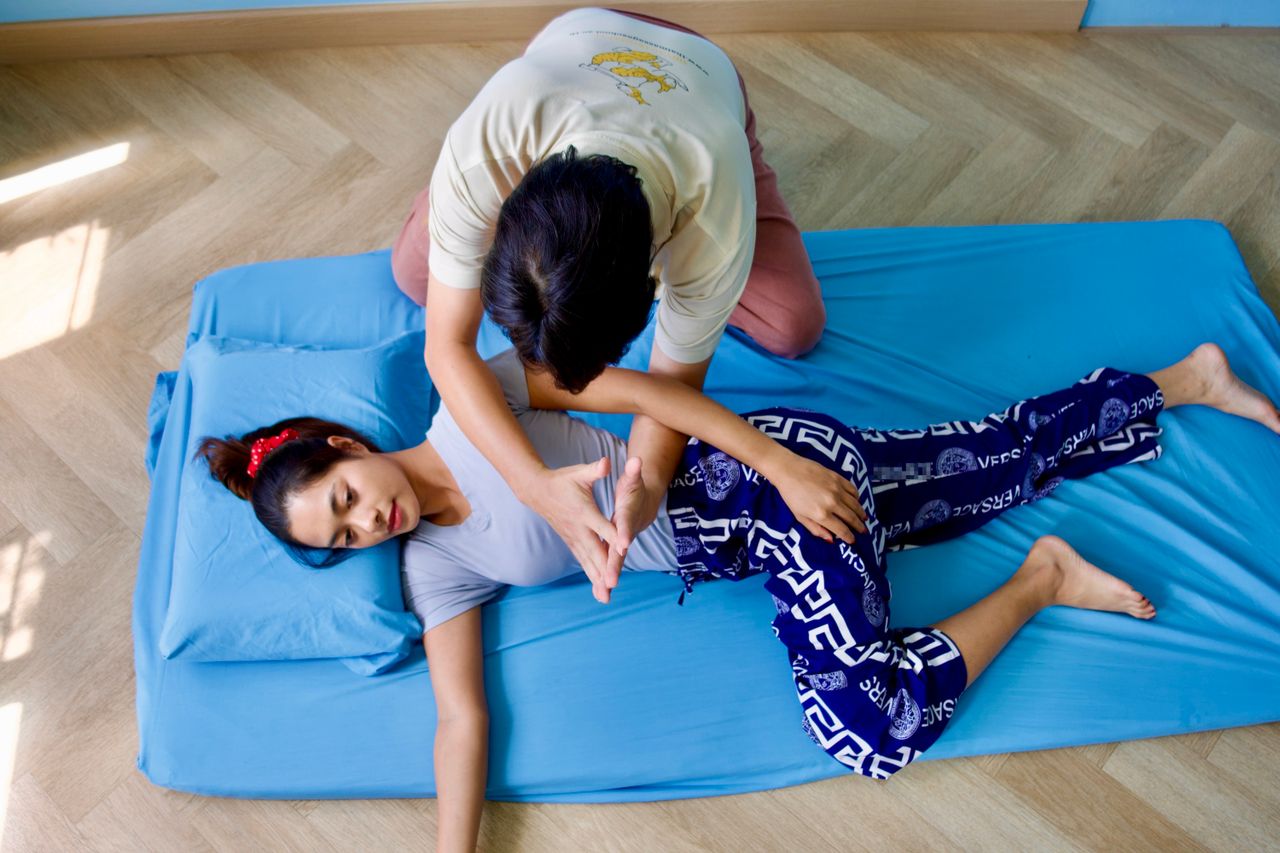
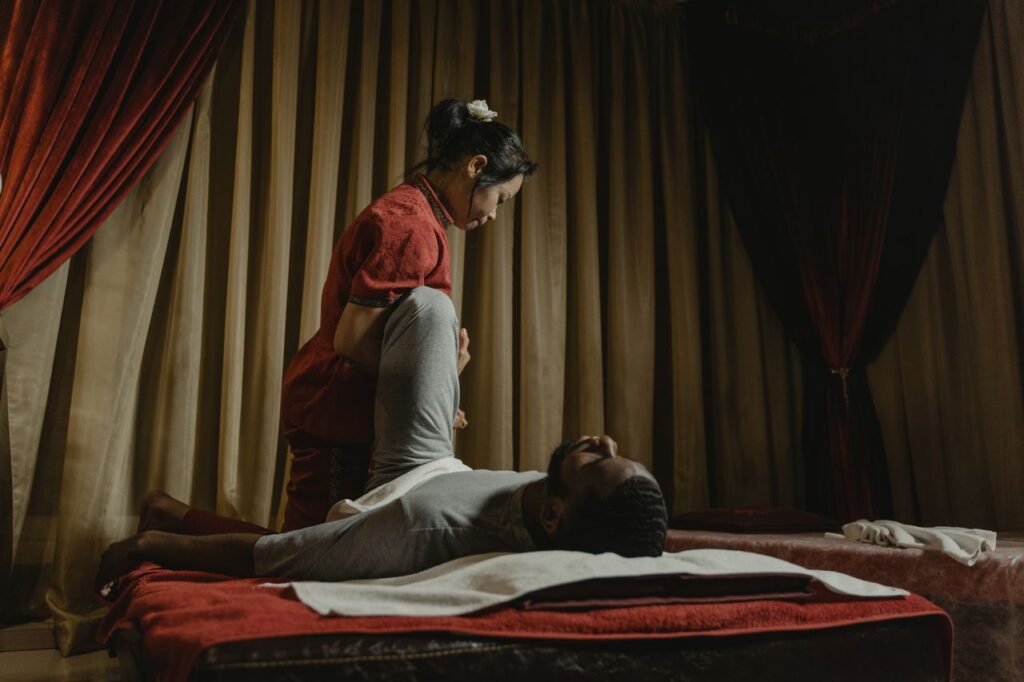
There I was, fully clothed in loose cotton trousers, lying on a floor mat while the therapist folded one leg, stretched my hip, pressed along my legs and somehow managed to put my body into positions I hadn’t voluntarily attempted since childhood.
Then I understood why people describe Thai massage as passive yoga.
Traditional Thai massage is not simply about lying still while someone rubs your shoulders. It’s a combination of pressure, stretching, compression and rhythmic movement. Depending on the therapist and style, it can be wonderfully relaxing—or surprisingly intense.
After trying different types of massage in Thailand, I’ve learned that the best experience starts before you even lie down. You need to know what you’re booking, how much it should cost, what to wear, how to communicate pressure and whether you should tip afterward.
Here’s everything I’d tell a first-time visitor.
What Exactly Is Traditional Thai Massage?
Traditional Thai massage is commonly called Nuad Thai or Nuad Boran.
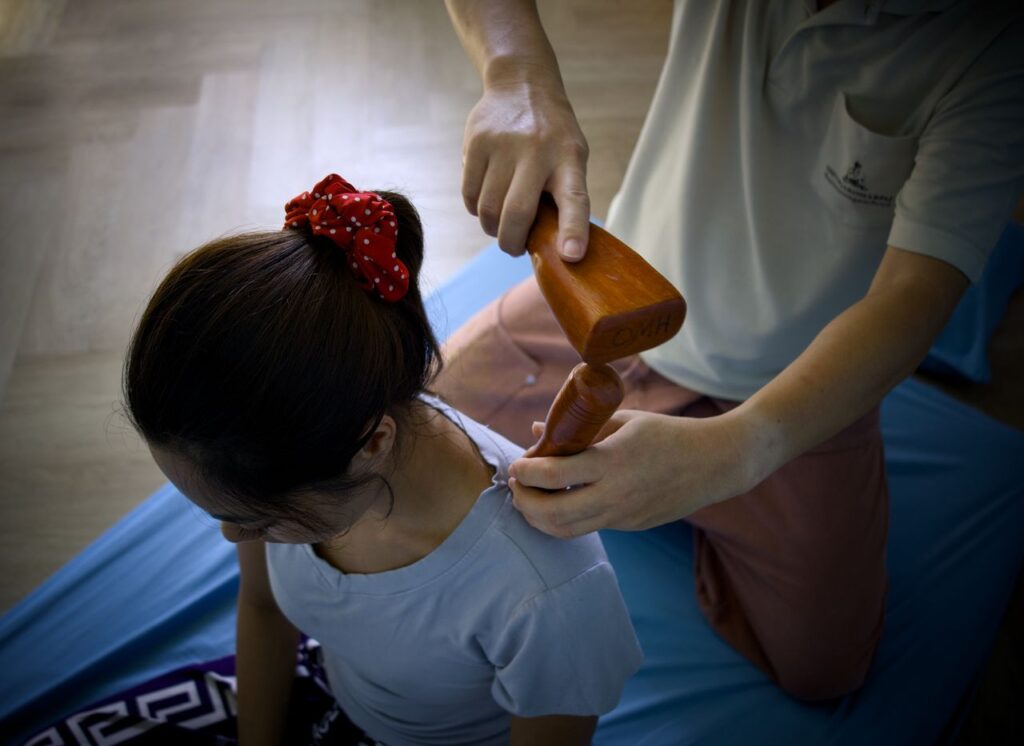
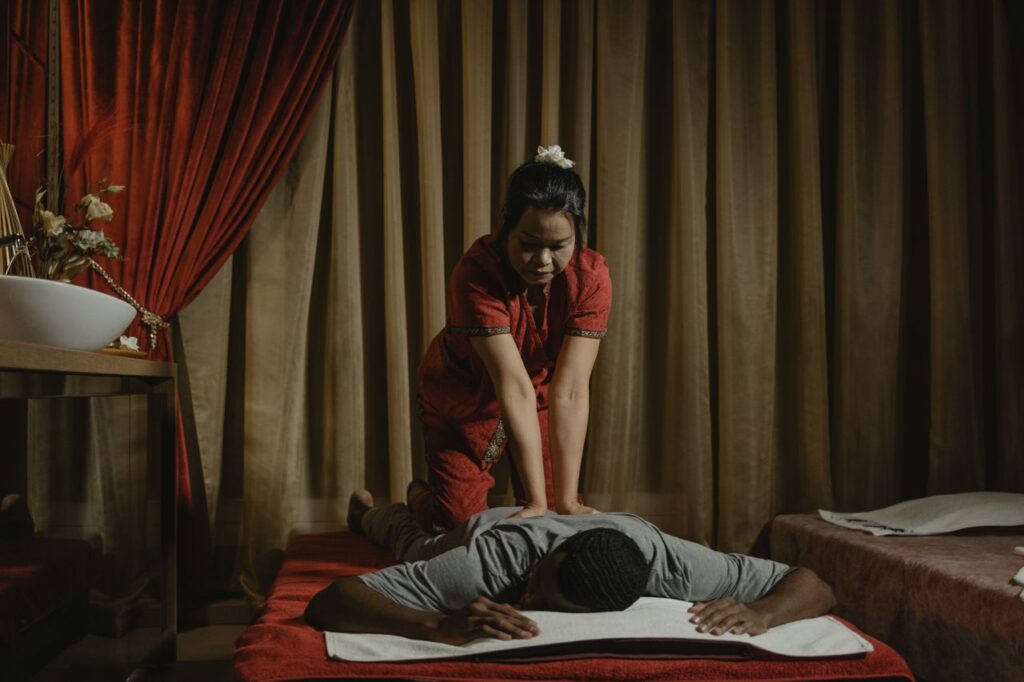
Unlike an oil massage, you normally remain fully clothed. The therapist works on a floor mat or low mattress and uses their hands, thumbs, forearms, elbows, knees and sometimes feet to apply pressure and move your body through stretches.
The practice has a long history in Thailand and is closely associated with traditional Thai medicine. Wat Pho in Bangkok is particularly important to its modern history: its traditional medicine and massage school was established in 1955 and continues to teach Thai massage.
When I’m explaining it to friends, I usually say:
Thai massage is part massage, part stretching session, and part “how did my leg get over there?”
The therapist isn’t trying to hurt you.
But Thai massage can be considerably more active than a Western-style relaxation massage.
What Happens During a Thai Massage?
If you’ve never had one, here’s roughly what to expect.
You arrive
You’ll usually choose your treatment and duration from a menu.
At a simple neighborhood shop, you might walk in without a reservation. For a popular spa, especially during evenings or weekends, I prefer booking ahead.
Before paying, I always confirm:
- Massage type
- Duration
- Total price
- Whether any extras are included
- Whether the therapist can adjust pressure
That takes about 30 seconds and prevents awkward surprises later.
You change clothes
For traditional Thai massage, you’ll generally receive loose clothing or wear comfortable clothing that allows movement.
You don’t normally need to undress for traditional Thai massage.
This is one of the biggest differences from oil massage.
You lie on a mat
The therapist may start with your feet and legs before gradually working upward.
Don’t worry if they ask you to turn over or change position.
The session can involve lying on your back, stomach or side.
The stretching begins
You’ll probably experience movements such as:
- Leg stretches
- Hip rotations
- Arm stretches
- Back pressure
- Shoulder work
- Foot and hand pressure
- Gentle rocking
- Compression along the limbs
The therapist controls the movement.
Your job is mostly to relax and breathe.
Is Thai Massage Painful?
It shouldn’t be.
This is probably the most important thing I tell first-timers.
There’s a difference between firm pressure and pain.
A strong stretch can feel intense, particularly if you’re stiff from walking around Bangkok all day. But sharp, burning or genuinely painful sensations aren’t something you should simply tolerate because you think Thai massage is supposed to hurt.
I communicate early.
If the pressure is too strong, I say:
“Bao bao, please.”
Bao means light/soft.
If I want stronger pressure:
“Nak.”
Nak means heavy/strong.
Even if the therapist doesn’t speak much English, these simple words combined with hand gestures usually work.
And don’t wait until the final ten minutes to say something.
If the pressure isn’t right, speak up during the first few minutes.
The Main Types of Thai Massage
The menu at a Bangkok massage shop can look surprisingly complicated.
Here’s how I break it down.
Traditional Thai Massage
This is the classic experience.
What it involves:
- Fully clothed
- Usually no oil
- Floor mat or low mattress
- Pressure and stretching
- Rhythmic movements
- Usually 60–120 minutes
This is what I’d recommend if you’ve never tried Thai massage before and want the traditional experience.
Thai Massage With Herbal Balm
This combines traditional Thai massage techniques with a topical herbal balm.
At Wat Pho’s official massage service, a 60-minute Thai massage with balm costs ฿680, while a 120-minute session costs ฿1,360.
The balm can create a warming or cooling sensation depending on the ingredients.
I particularly like this after a long day of walking.
Thai Massage With Plai Oil
Plai is a traditional Thai medicinal plant commonly used in Thai herbal preparations.
Wat Pho currently lists its Thai massage with plai oil at ฿620 for 60 minutes and ฿1,240 for 120 minutes.
It’s an interesting option if you want something connected to traditional Thai herbal practice without going all the way into a full spa treatment.
Foot Massage
This is my favorite after a day of sightseeing.
After walking around temples, markets and shopping malls for hours, sitting down for a foot massage feels fantastic.
Wat Pho currently charges ฿340 for 30 minutes, ฿520 for 60 minutes and ฿1,040 for 120 minutes.
You don’t need to commit to a two-hour session.
If your legs are exhausted, one hour is plenty.
Oil Massage
Oil massage is quite different from traditional Thai massage.
You’re generally on a massage table rather than a floor mat, and the therapist uses oil with flowing strokes.
It’s usually a better choice if your main goal is relaxation.
I wouldn’t order a traditional Thai massage expecting an hour of gentle rubbing.
You’ll get a very different experience.
How Much Does Thai Massage Cost?
Prices vary dramatically depending on location, facilities and the reputation of the establishment.
A basic neighborhood shop can be surprisingly inexpensive, while a luxury hotel spa can cost several thousand baht for an hour.
Current Bangkok price guides put a typical one-hour traditional Thai massage around ฿250–฿400 at a basic local shop, around ฿600–฿1,200 at higher-end spas, with luxury hotel treatments often reaching ฿1,500–฿4,000 or more. These are market ranges rather than fixed national prices.
Here’s the rough budget I’d use:
| Type of place | Thai massage, 60 min |
|---|---|
| Simple local shop | ฿250–฿400 |
| Tourist-area shop | ฿300–฿500 |
| Mid-range spa | ฿500–฿1,200 |
| Luxury hotel spa | ฿1,500–฿4,000+ |
| Wat Pho official service | ฿520 |
Wat Pho is a particularly useful benchmark because its current official price is clearly published.
My Favorite Place for a First Thai Massage: Wat Pho
If you’re in Bangkok and want to combine culture with your first massage, I’d consider the Wat Pho Thai Traditional Medical School.
The massage service operates 08:00–19:30 daily, according to Wat Pho’s official visitor information.
Current prices are:
- 30-minute Thai massage — ฿340
- 60-minute Thai massage — ฿520
- 120-minute Thai massage — ฿1,040
- 60-minute Thai massage with balm — ฿680
- 60-minute Thai massage with plai oil — ฿620
- 60-minute foot massage — ฿520
The school is inside Wat Pho, next to the Grand Palace area.
You can reach the temple by MRT via Sanam Chai Station, then walk toward Wat Pho.
One thing to remember: the temple itself has an admission fee for foreign visitors, currently ฿300, while the massage service has its own separate service charges.
I wouldn’t confuse the two prices.
Do You Need to Book?
For a small neighborhood massage shop, usually not.
You can often walk in, look at the menu and choose a time.
For popular spas, I recommend booking.
My rule is:
Walk-in is fine when:
- You’re flexible about the time.
- You’re visiting a basic local shop.
- You don’t care which therapist you get.
Book ahead when:
- You’re visiting a popular spa.
- You want a particular therapist.
- You’re going on Friday or Saturday evening.
- You’re traveling with several people.
- You’re booking a hotel spa.
I particularly wouldn’t leave a luxury spa booking until the last minute.
You’re paying for the environment as well as the treatment, so it’s worth planning.
What Should You Wear?
For traditional Thai massage, loose clothing is ideal.
If the shop provides massage clothing, you’ll usually change into loose trousers and a top.
If you’re going somewhere that doesn’t provide clothing, I’d wear:
- Loose trousers
- T-shirt
- Comfortable shorts that allow movement
- Lightweight clothing
Avoid tight jeans.
Avoid restrictive gym clothing.
And don’t arrive wearing your most complicated outfit in the world.
You’re going to be moving.
For oil massage, the clothing arrangements are different, and the spa will normally explain what you need to do.
Should You Shower Before a Massage?
It’s good etiquette.
If you’ve spent six hours walking around Bangkok in 34°C heat, don’t walk directly into a massage room expecting someone else to deal with the consequences.
A quick shower before your appointment is considerate.
It also makes the experience more comfortable for you.
At higher-end spas, showers and changing facilities are usually available.
At small neighborhood shops, facilities are much more basic.
How Much Should You Tip?
This is where many first-time visitors get confused.
Tipping is appreciated in Thailand, but there isn’t one legally fixed percentage that everyone must follow.
For a normal massage, I generally use the quality and length of the service as my guide.
A practical range is:
- ฿50–฿100 for a basic neighborhood massage
- ฿100–฿200 for a good mid-range session
- ฿200–฿300+ for excellent service at a higher-end spa
Current Bangkok guides commonly suggest around ฿50–฿100 for neighborhood shops and ฿100–฿200 at mid-range venues, while larger tips can be appropriate at luxury spas.
You don’t need to calculate 15% or 20% like a restaurant bill.
I usually hand the tip directly to the therapist after the session and say thank you.
Cash is easiest.
What If a Service Charge Is Already Included?
At an upscale spa, check the bill.
Some establishments add service charges.
If you’re unsure whether a tip is expected, simply ask the reception staff.
That’s better than standing at the counter staring at the receipt like you’re trying to decode an ancient inscription.
If a service charge has already been added, you don’t necessarily need to leave a large additional tip.
If the therapist provided particularly good service, a personal cash tip is still a nice gesture.
Don’t Be Afraid to Set Boundaries
This is important for solo travelers.
Before the massage starts, make sure you know exactly what you’ve booked.
A reputable traditional Thai massage should have a clear menu and clearly communicate the service.
If someone tries to add an unexpected service or charge that wasn’t agreed upon, politely say no.
You can simply say:
“No, thank you. Thai massage only.”
If the situation makes you uncomfortable, leave.
You don’t owe a business your money just because you’ve already walked inside.
A Few Things I Wish I’d Known Earlier
Don’t eat a huge meal immediately beforehand
You’ll spend much of the session being stretched and compressed.
A light meal is much more comfortable.
Don’t schedule it immediately after heavy drinking
Massage and dehydration aren’t a great combination.
Don’t ask for maximum pressure immediately
You don’t know how your body will react.
Start moderate and adjust.
Don’t fall asleep and worry about snoring
Therapists have heard worse.
Don’t compare Thai massage with a Western massage
They’re fundamentally different experiences.
Don’t assume expensive means better
A ฿300 neighborhood massage can sometimes be far more satisfying than a luxury treatment costing ten times as much.
A Simple Thai Massage Vocabulary
These few words can make communication much easier.
| Thai | Meaning |
|---|---|
| เบา (bao) | Light / gentle |
| หนัก (nak) | Strong / heavy |
| เจ็บ (jep) | Painful |
| ไม่เจ็บ (mai jep) | Not painful |
| พอแล้ว (pho laeo) | That’s enough |
| ขอบคุณ (khop khun) | Thank you |
If something hurts, don’t suffer silently because you’re worried about being rude.
A good therapist would rather adjust the pressure than discover afterward that you spent an hour clenching every muscle in your body.
My Ideal First-Timer Experience
If I were recommending a first Thai massage to a friend, I’d keep it simple.
I’d book a 60-minute traditional Thai massage at a reputable shop.
I’d avoid the cheapest possible place if the hygiene looks questionable.
I’d arrive freshly showered, wearing comfortable clothes.
I’d tell the therapist:
“Medium pressure, please.”
I’d drink some water afterward.
And I’d keep ฿100–฿200 in cash for a tip if the experience was good.
You don’t need a two-hour treatment on your first attempt.
One hour gives you enough time to understand what Thai massage actually feels like without committing your entire afternoon to discovering whether your hamstrings have secretly declared war on you.
The Best Part of Thai Massage
What keeps bringing me back isn’t simply the price.
It’s the practicality.
After a day of walking through Bangkok, climbing temple stairs, carrying a backpack or sitting on a long bus ride, an hour of Thai massage can completely change how I feel.
Sometimes I want the traditional stretching.
Sometimes I want a foot massage.
Sometimes I want nothing more complicated than lying on a comfortable table and letting someone work the tension out of my shoulders.
That’s the beauty of having so many options in Thailand.
You don’t have to choose the fanciest spa or the most famous massage school.
Find a clean, reputable place, understand what you’re booking, communicate your preferred pressure, respect the therapist and tip according to the quality of the service.
Then relax.
And if your therapist somehow manages to stretch your legs farther than you thought physically possible, don’t panic.
That’s probably part of the experience.