
Bangkok is one of those cities where you can leave an air-conditioned shopping mall, turn a corner, and suddenly find yourself standing in front of a centuries-old temple with incense drifting through the courtyard.
I’ve learned that temple-hopping here is less about ticking off seven famous buildings and more about getting the timing right. Arrive at the wrong hour and you’ll be sweating behind a tour group. Arrive early, wear the right clothes, and suddenly Bangkok feels remarkably quiet.
I’d put these seven temples at the top of my Bangkok list, especially if it’s your first visit.
Practical note: Opening hours and admission policies can change around religious holidays and royal events, so I recommend checking the temple’s official information shortly before you go. The prices below reflect the latest information I could verify for 2026.
Bangkok Temple Quick Guide
| Temple | Foreign Visitor Fee | Typical Hours | Best Time |
|---|---|---|---|
| Grand Palace & Wat Phra Kaew | 500 THB | 8:30 AM–4:30 PM | 8:30–10:00 AM |
| Wat Pho | 300 THB | 8:00 AM–7:30 PM | 8:00–10:00 AM |
| Wat Arun | 200 THB | 8:00 AM–6:00 PM | 8:00–10:00 AM or late afternoon |
| Wat Saket | 50 THB | 7:30 AM–7:00 PM | Early morning or sunset |
| Wat Traimit | 100 THB for foreign visitors* | 8:00 AM–5:00 PM | 8:00–10:00 AM |
| Wat Suthat | 100 THB | 8:30 AM–9:00 PM | Late afternoon |
| Wat Ratchanatdaram / Loha Prasat | Free or nominal donation/fee depending on area | Around 9:00 AM–5:00 PM | Morning or late afternoon |
*Some current visitor information separates the Golden Buddha viewing fee from the museum fee, so check the on-site ticket counter if you want the full museum experience.
1. The Grand Palace and Wat Phra Kaew
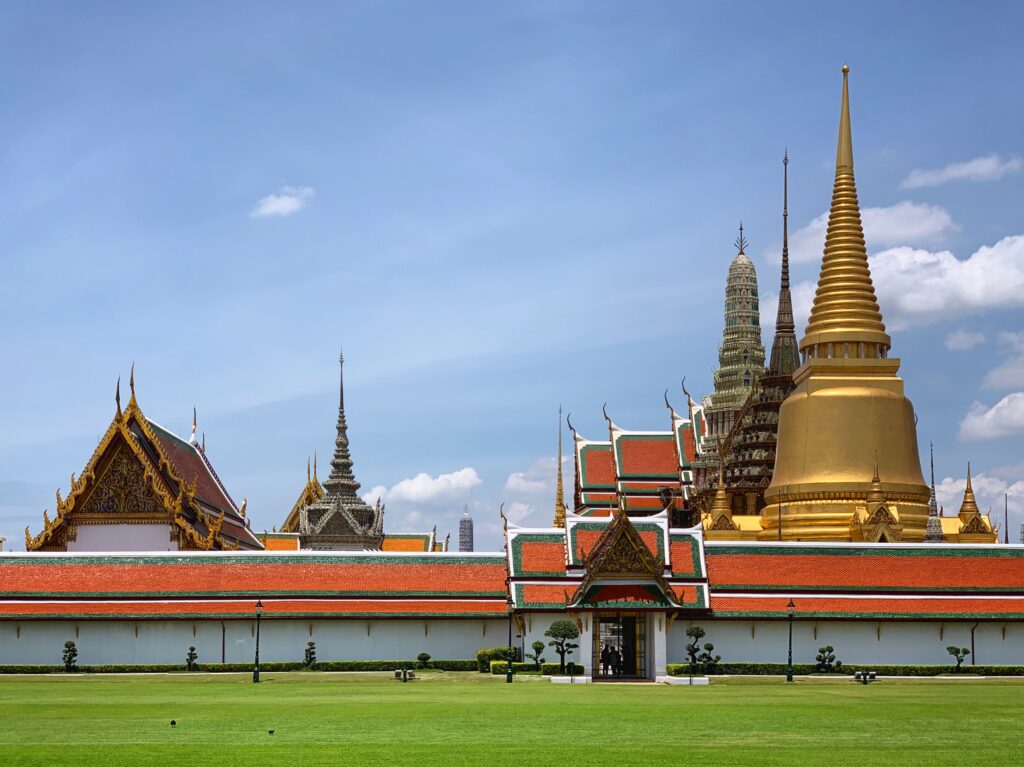
If you only have time for one major temple complex, I’d start here.
The Grand Palace is not technically a temple, but Wat Phra Kaew, the Temple of the Emerald Buddha, sits inside the palace compound, and leaving it off a Bangkok temple list would make very little sense.
My first visit taught me something quickly: this is not the place to turn up in beach clothes because Bangkok is hot. The official dress rules are strict. Sleeveless shirts, vests, short tops, see-through clothing, short pants, ripped trousers, tight clothing and mini skirts can all prevent entry.
For foreign visitors, admission is 500 THB. The ticket includes the Grand Palace, Wat Phra Kaew and the Queen Sirikit Museum of Textiles. The official site currently lists opening hours as 8:30 AM to 4:30 PM, with ticket sales until 3:30 PM.
I strongly recommend arriving around opening time. By late morning, the combination of heat, tour groups and reflective golden surfaces can be exhausting.
Getting there:
- MRT Blue Line → Sanam Chai Station, Exit 1
- BTS → Saphan Taksin, then walk to Sathorn Pier and take the Chao Phraya Express Boat to Tha Chang (N9)
- From the river, Tha Tien (N8) is also useful for combining the palace area with Wat Pho.
The official palace website also allows advance online ticket purchases, with tickets available up to a month ahead.
2. Wat Pho — The Reclining Buddha
6
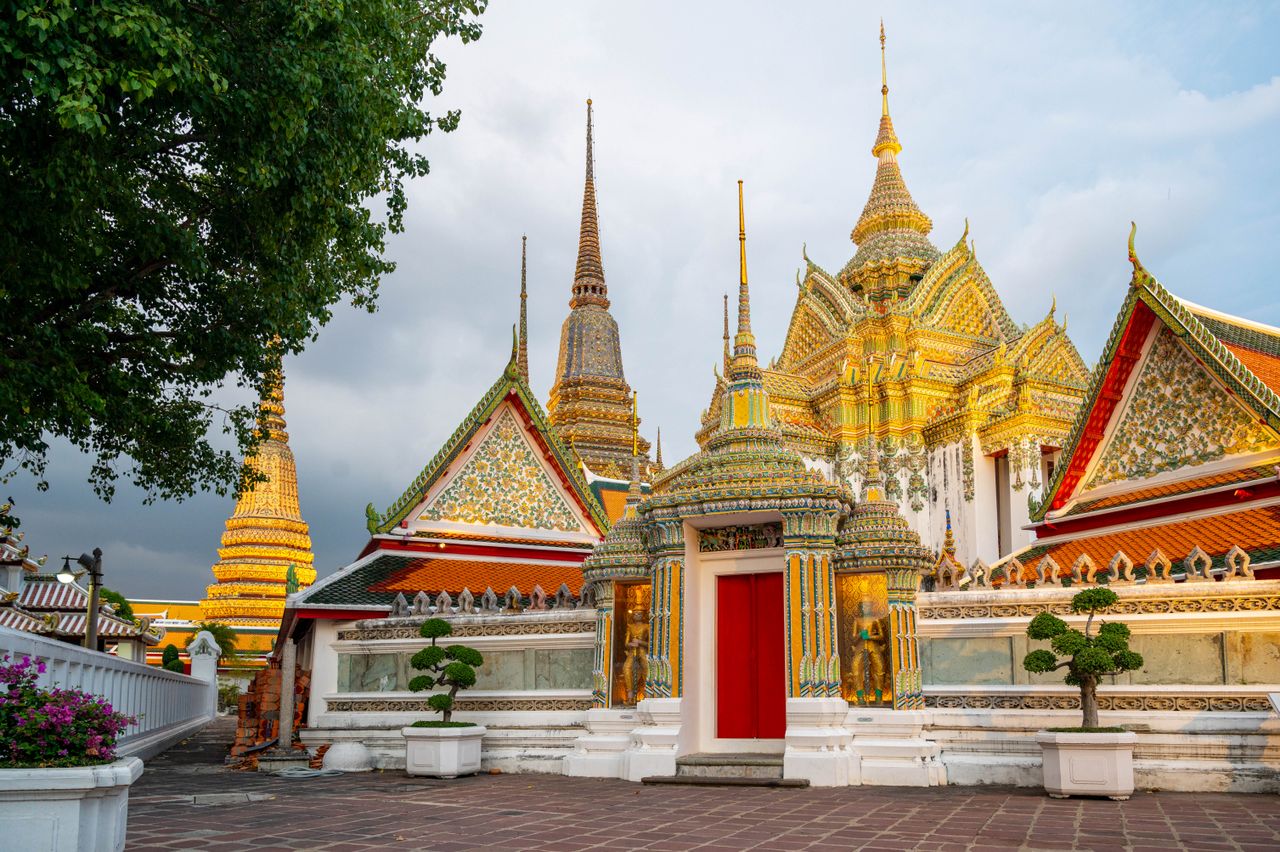
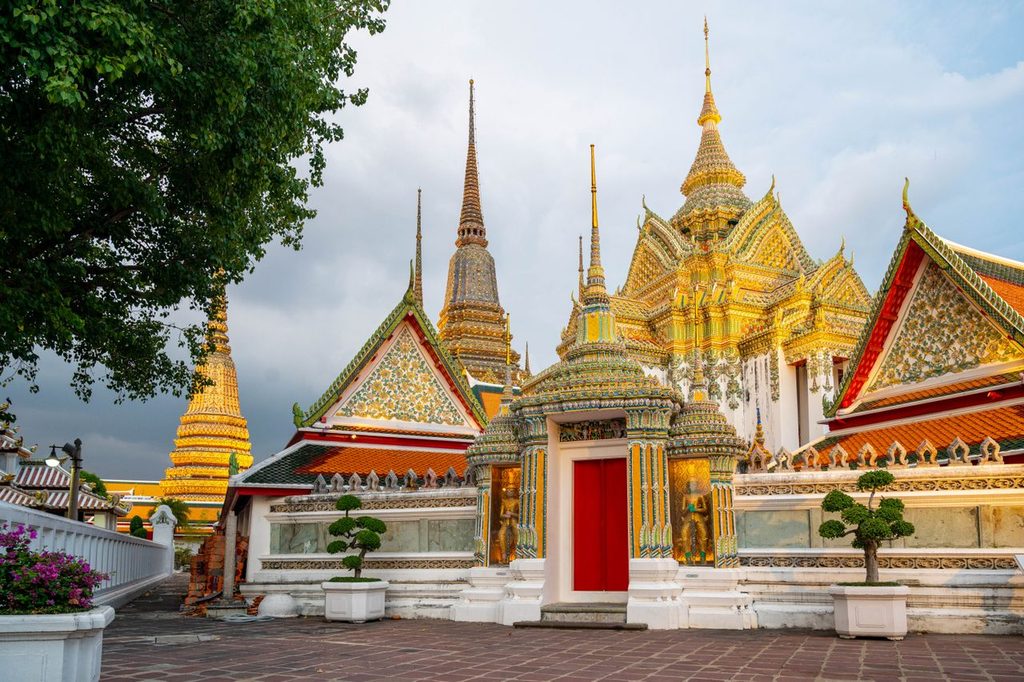
Wat Pho is probably the temple I recommend most often to first-time visitors because it combines history, architecture and that enormous reclining Buddha without requiring an entire morning.
The official temple information lists the admission fee for foreign visitors at 300 THB and operating hours of 8:00 AM to 7:30 PM. Thai citizens can enter free with valid ID.
The reclining Buddha is the obvious attraction, but don’t rush straight there. Walk through the courtyards and look at the rows of chedis decorated with colorful porcelain. They’re much more impressive in person than they appear in photographs.
The dress code is respectful rather than as detailed as the Grand Palace, but I’d still wear trousers or a long skirt and a shirt covering the shoulders. The temple specifically advises women not to wear shorts above the knee.
Getting there:
- MRT Blue Line → Sanam Chai Station, then a short walk
- Chao Phraya Express Boat → Tha Tien Pier (N8)
My favorite trick is to visit Wat Pho immediately after the Grand Palace. They’re next door, so there’s no reason to waste time sitting in Bangkok traffic.
3. Wat Arun — Temple of Dawn
6
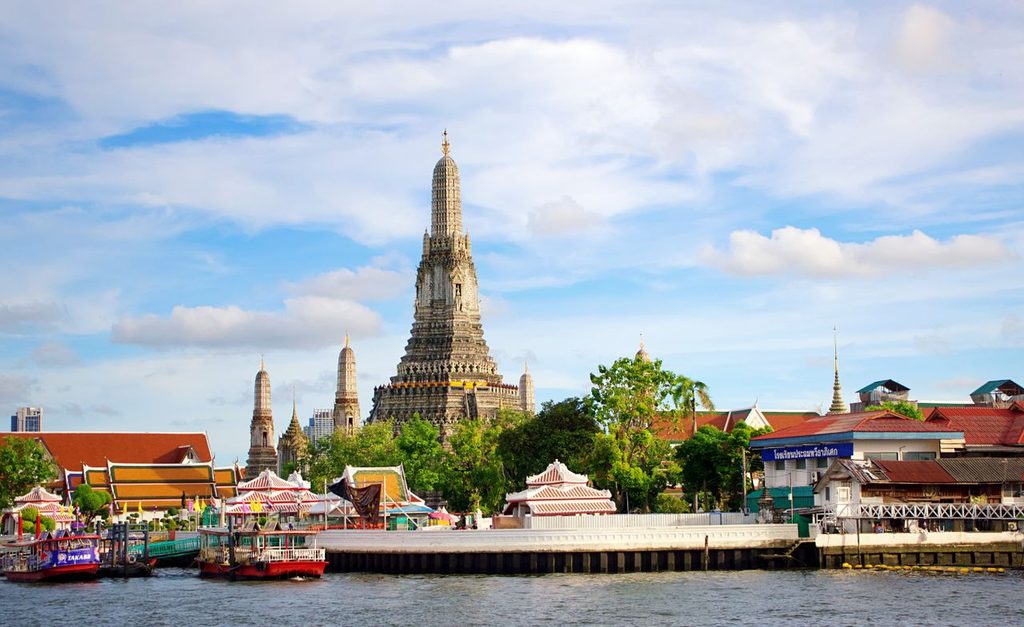
Wat Arun is the temple that makes you stop walking for a second.
Its central prang rises dramatically above the Chao Phraya River, covered with intricate ceramic and porcelain decoration. I particularly like approaching it by boat because the temple gradually becomes larger as you cross the river.
The current official visitor information lists 8:00 AM to 6:00 PM daily and an adult foreign visitor fee of 200 THB.
For photography, I’d choose early morning or late afternoon. Midday sunlight is harsh, and climbing around the temple in Bangkok’s humidity can turn a pleasant sightseeing stop into an unexpected workout.
Getting there:
- MRT → Sanam Chai Station, walk to Tha Tien
- Take the short cross-river ferry from Tha Tien Pier to Wat Arun
- Alternatively, approach from another Chao Phraya pier by boat.
Wear shoes with decent grip if you plan to explore the elevated areas. The steep steps deserve more respect than they look like they need.
4. Wat Saket and the Golden Mount
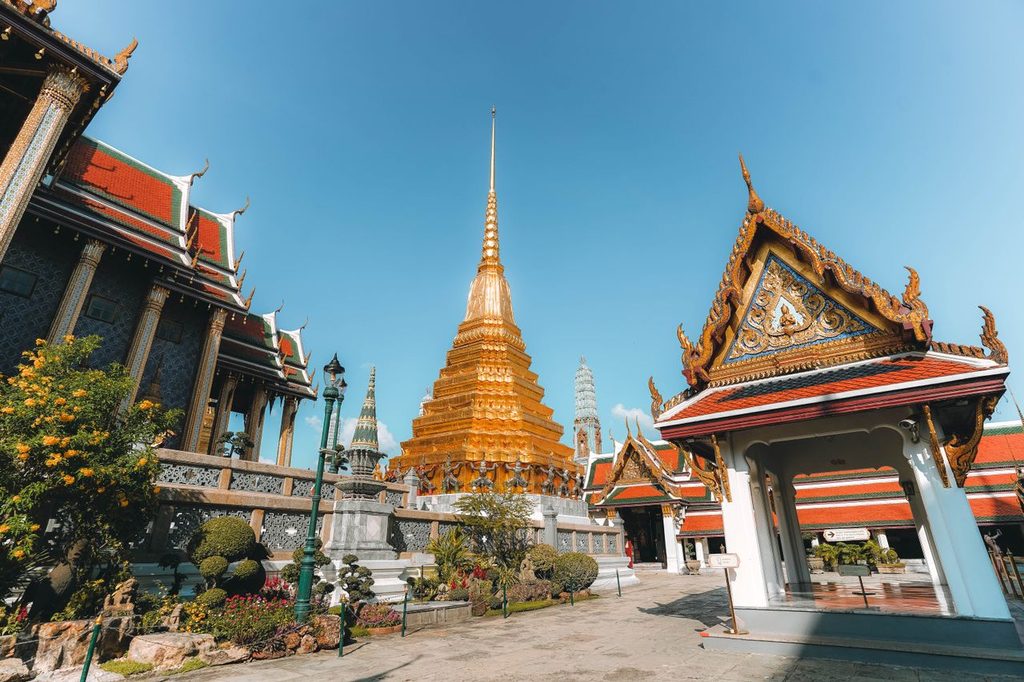
If you want a Bangkok viewpoint without paying for a rooftop bar, head to Wat Saket.
The Golden Mount sits on an artificial hill, and reaching the top involves a long spiral of stairs. I actually enjoy the climb because it doesn’t feel like a conventional sightseeing attraction. You pass bells, greenery and quiet corners before reaching the golden chedi.
Current 2026 visitor information lists the temple as open 7:30 AM to 7:00 PM, with foreign admission around 50 THB.
Go early if you want cooler temperatures. Go around late afternoon if your priority is the view and sunset.
Getting there:
- MRT Blue Line → Sam Yot Station, then walk roughly 20 minutes
- Saen Saep canal boat → Phan Fa Lilat Pier, followed by a short walk
- Several buses also serve the Ratchadamnoen area.
Bring water. The hill isn’t enormous, but Bangkok humidity has a way of making ordinary stairs feel personally offensive.
5. Wat Traimit — The Golden Buddha
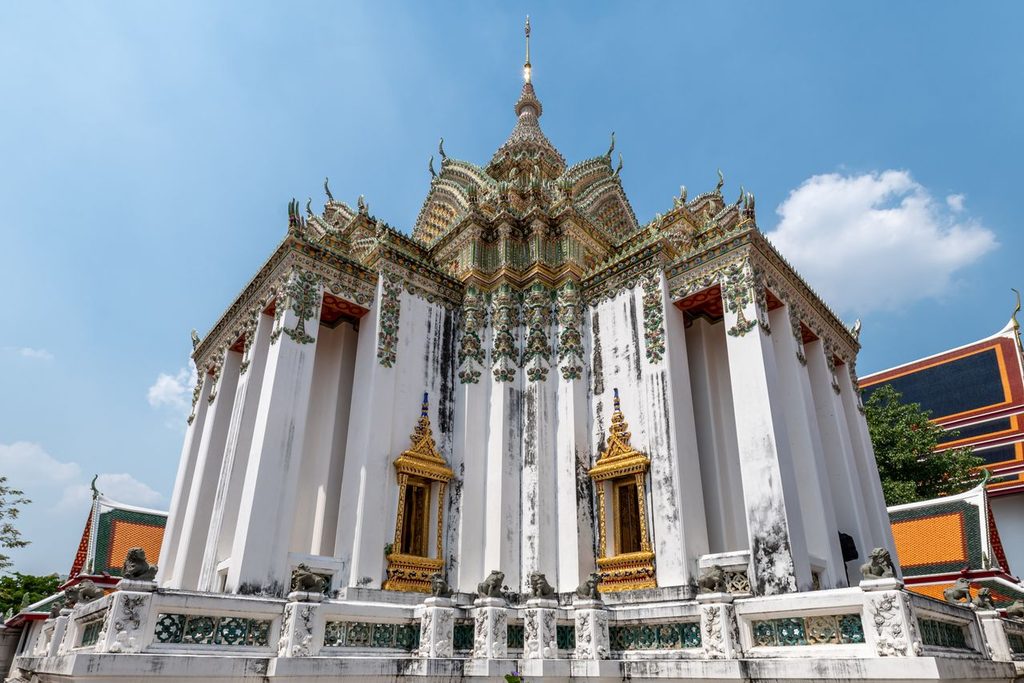
Wat Traimit is perfect to combine with a Chinatown morning.
The temple houses the famous Golden Buddha, a massive solid-gold Buddha image that weighs several tonnes. The building itself is impressive, but the real surprise is standing in front of the Buddha and realizing just how large it actually is.
Current visitor information places opening hours at approximately 8:00 AM to 5:00 PM. Foreign visitor pricing is commonly listed around 100 THB, although some sources distinguish between the Buddha viewing area and the museum ticket.
Getting there:
- MRT Blue Line → Hua Lamphong Station, then roughly a five-minute walk
- MRT Wat Mangkon is another option, followed by a longer walk.
I prefer arriving around 8 AM, seeing the temple before the crowds build, and then walking toward Yaowarat for breakfast or coffee.
6. Wat Suthat and the Giant Swing
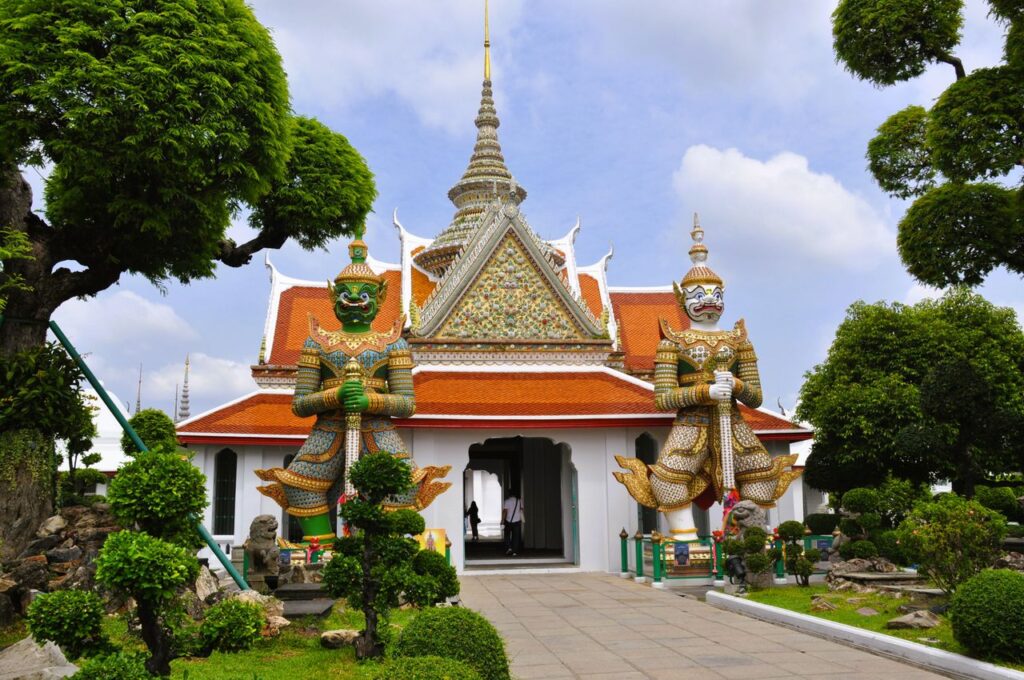
Wat Suthat is one of those places that gets overlooked because Bangkok has louder attractions.
That’s precisely why I like it.
The enormous red Giant Swing stands directly outside, while inside the temple are beautiful murals, Buddha images and a peaceful courtyard. Current visitor information lists 8:30 AM to 9:00 PM daily, with foreign admission of 100 THB.
Late afternoon works particularly well. The temperature becomes more manageable, and the temple can feel much calmer than Wat Pho or the Grand Palace.
Getting there:
- MRT Blue Line → Sam Yot Station, then walk
- It’s also within walking distance of Wat Ratchanatdaram and Wat Saket.
Cover your shoulders and knees and remove your shoes before entering areas where required.
7. Wat Ratchanatdaram and Loha Prasat
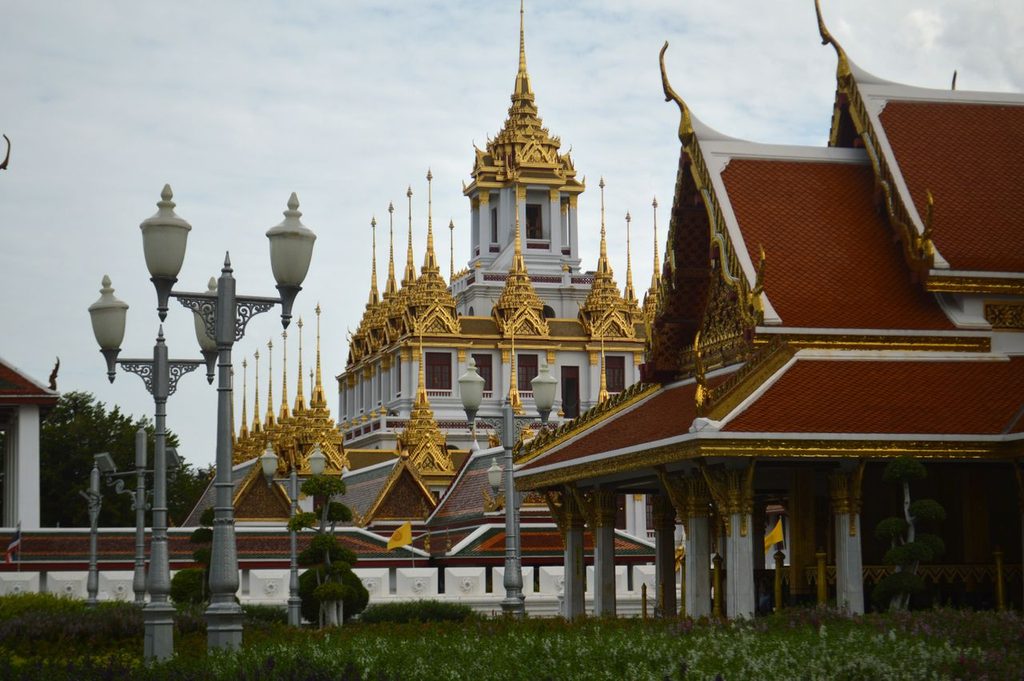
This is my pick for travelers who want something different from the usual Bangkok temple photographs.
Loha Prasat, or the “Metal Castle,” is striking because of its unusual multi-level structure and rows of spires. The architecture feels completely different from Wat Arun or Wat Pho.
Current visitor information lists the site around 9:00 AM to 5:00 PM, with recent sources reporting free admission, while other current guides mention a small contribution or fee for certain areas.
I’d combine it with Wat Suthat and Wat Saket because they’re relatively close together. That gives you three very different temples without repeatedly jumping into taxis.
The easiest one-day Bangkok temple route
If I had only one day, I wouldn’t randomly cross Bangkok seven times. I’d group the temples geographically.
Morning
- 8:00 AM — Wat Pho
- 9:30 AM — Grand Palace & Wat Phra Kaew
- 11:30 AM — Cross the river to Wat Arun
Afternoon
- Lunch and a break from the heat
- 3:30 PM — Wat Suthat
- 4:30 PM — Wat Ratchanatdaram
- Sunset — Wat Saket
Save Wat Traimit for a separate Chinatown morning if possible. Seven temples in one day is technically achievable, but your feet may file a formal complaint.
Temple dress code: what I actually pack
I’ve stopped trying to dress “touristy” for temple days. My simple formula is:
- Lightweight trousers or long pants
- T-shirt or shirt covering the shoulders
- Comfortable walking shoes
- Small scarf or lightweight overshirt
- Water bottle
- Sunglasses for the streets, but remove them when appropriate inside religious spaces
The Grand Palace is the strictest of these seven, so dress for its rules and you’ll generally be fine elsewhere.
Avoid ripped jeans, crop tops, transparent shirts and very short shorts. Even if another temple lets you through, it’s better to dress respectfully from the start.
Mistakes I’d avoid
The biggest mistake is believing every person who tells you, “Temple closed today.”
Around major Bangkok attractions, unofficial guides and tuk-tuk drivers sometimes approach tourists with claims that a temple is closed and offer to take them somewhere else. Don’t panic. Check the attraction’s official website or walk to the entrance yourself.
I’d also avoid trying to photograph everything. At Wat Pho, for example, the reclining Buddha is surrounded by people doing exactly the same thing. Take your photo, then put the phone away for five minutes.
And remember that these are active religious sites, not just photo backgrounds. Keep voices low, follow signs, remove shoes where required, and never climb on religious structures or point your feet toward Buddha images.
The best Bangkok temple experience I’ve had has rarely been about getting the perfect photograph. It’s been the quiet ten minutes after a tour group leaves, the sound of a bell somewhere behind a wall, or sitting under a shaded roof while the city keeps roaring outside.
Bangkok has plenty of spectacular attractions, but its temples reward travelers who slow down. Arrive early, dress properly, carry water, and leave yourself enough time to actually look around. That’s when the city’s old side starts to feel less like a sightseeing checklist and more like somewhere you’ve genuinely visited.