
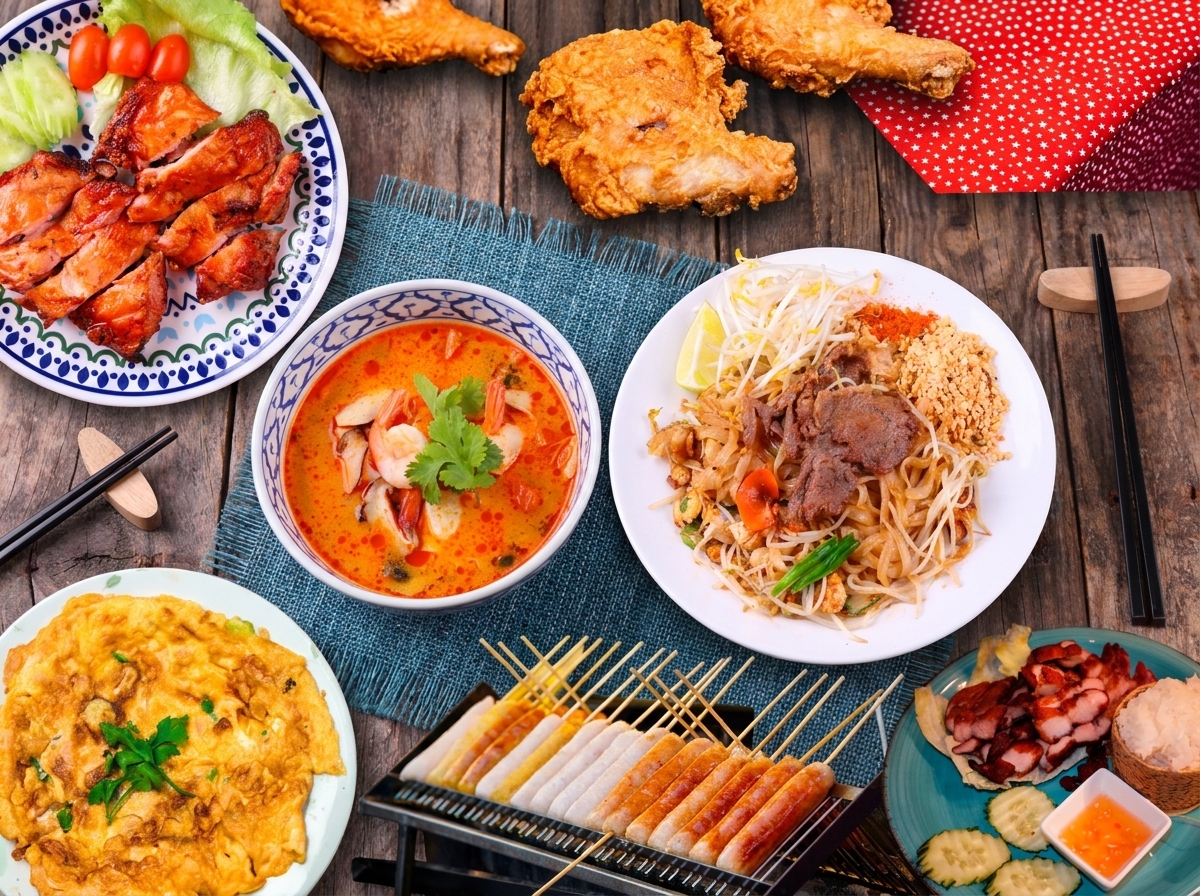
Bangkok after dark is a completely different city.
The traffic is still there, the sidewalks are still crowded, and the humidity still sticks to your skin, but once the food stalls start firing up their grills, I tend to forget about all of that. Smoke rolls across the street, someone is pounding chilies in a mortar, skewers are sizzling over charcoal, and the smell of garlic, basil, lime and fish sauce seems to come from every direction.
For me, the best way to experience Bangkok’s street food isn’t by sitting down at one restaurant and ordering ten dishes. It’s by walking through a night market, buying one small portion here, sharing another dish there, and gradually building your own dinner.
Bangkok’s night-market scene changes quickly, so don’t rely on old travel guides. As of 2026, Jodd Fairs Ratchada operates daily, the original Train Night Market Ratchada has reopened, and Yaowarat remains one of Bangkok’s best evening food destinations.
Here are the ten dishes I would put at the top of my list.
1. Moo Ping — Thai Grilled Pork Skewers
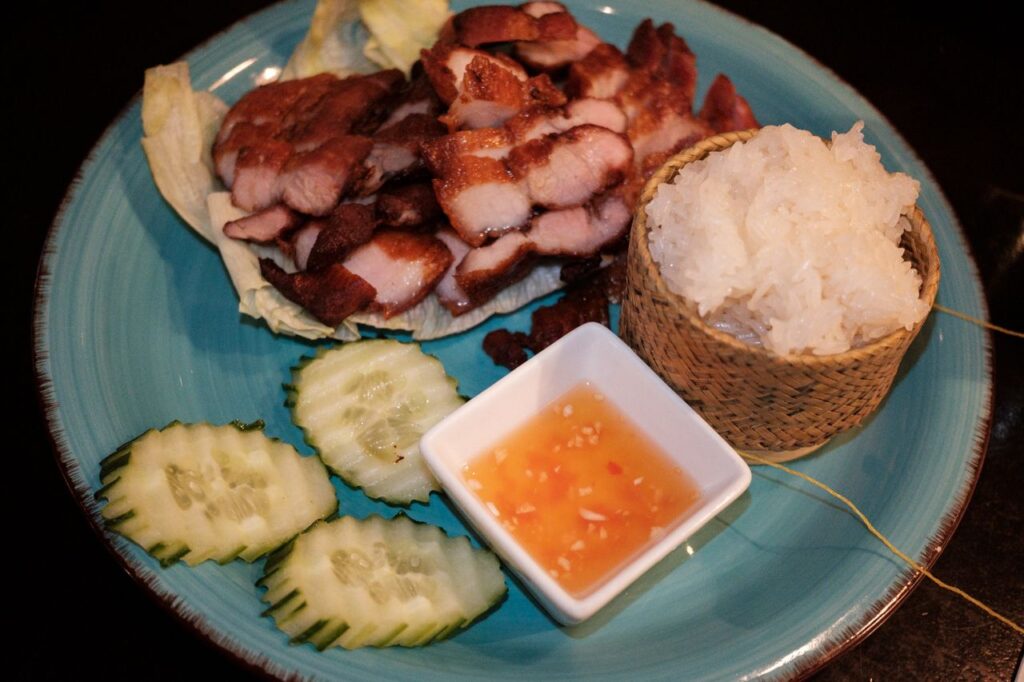
If I smell charcoal before I’ve even found the food stall, I’m probably stopping.
Moo ping is marinated pork grilled on bamboo skewers over charcoal. The marinade usually brings together garlic, coriander root, pepper, soy or fish sauce, and a little sweetness.
The outside gets lightly caramelized while the inside stays tender.
A typical skewer is inexpensive, and I normally order several rather than treating it as a complete meal. Pair it with sticky rice and you’ve got one of the simplest—and most satisfying—Thai street-food dinners.
Typical price: ฿10–฿30 per skewer
Best time: Around 6:00–9:00 PM
What to look for: A busy charcoal grill with locals waiting for fresh batches
One little trick: don’t automatically choose the stall with the biggest tourist crowd. A long line of Thai customers is usually a better signal.
2. Pad Thai
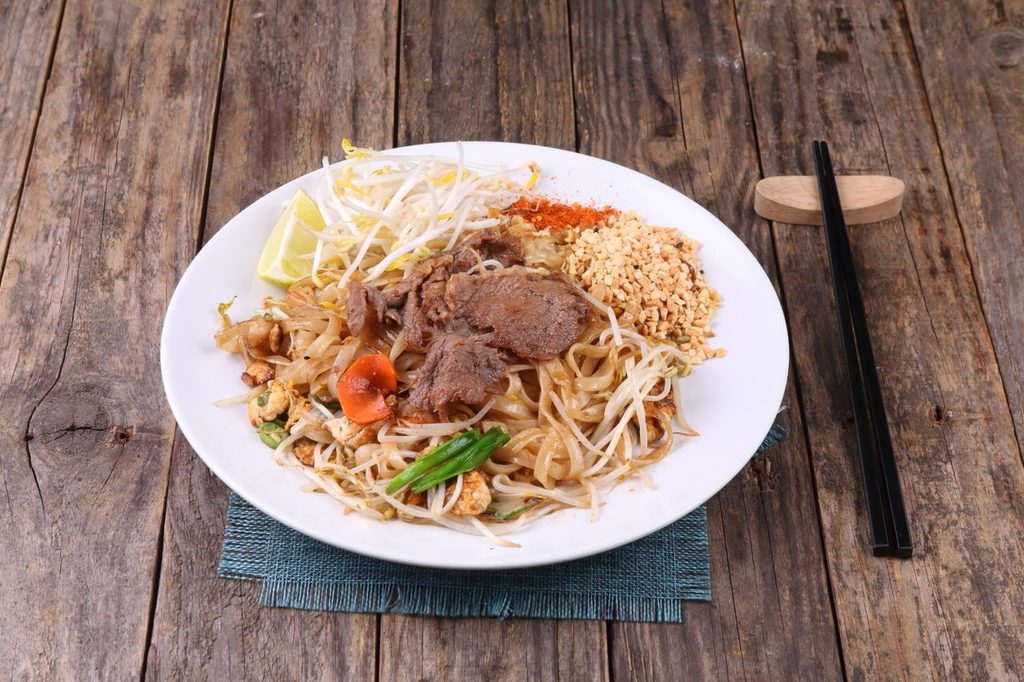
Yes, it’s tourist-famous.
Yes, you should still eat it.
A good street-side pad Thai is very different from the versions I’ve had in generic Thai restaurants overseas. The noodles should have a balance of sweet, sour and salty flavors rather than tasting like pure sugar.
You’ll usually get rice noodles stir-fried with egg, tofu, bean sprouts and other ingredients, with lime, chili flakes, crushed peanuts and sugar available to adjust the flavor yourself.
Typical price: ฿60–฿120
Best place to try: Yaowarat or a busy neighborhood night market
My tip: Squeeze the lime first, then adjust chili gradually.
Don’t dump everything onto the noodles immediately. Taste it first.
3. Som Tam — Green Papaya Salad
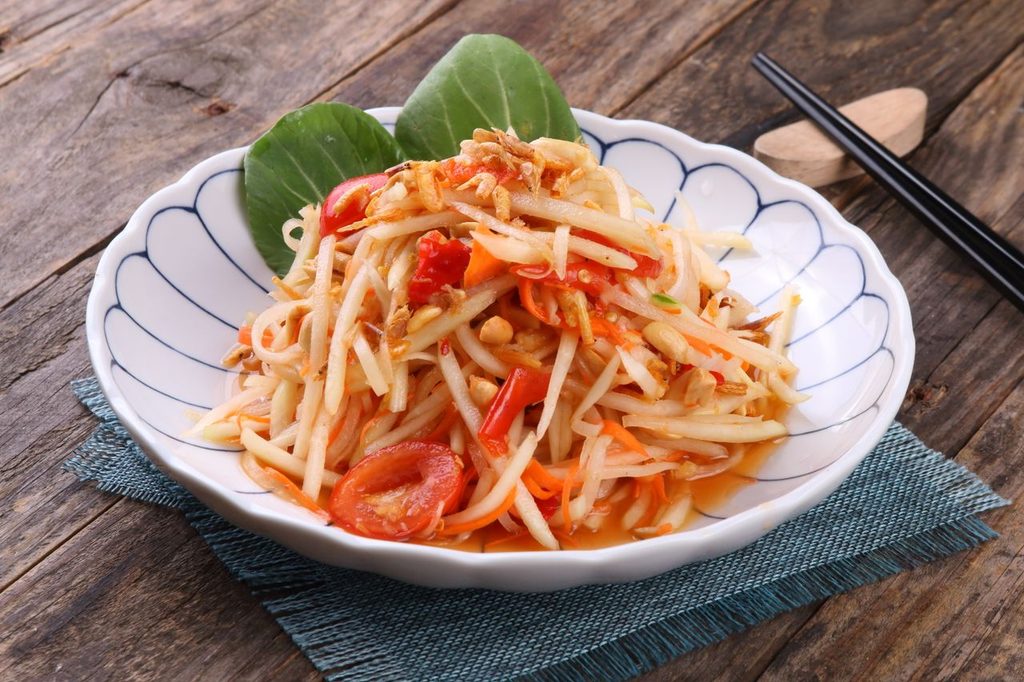
Som tam is the dish I order when I want something spicy enough to wake me up.
Green papaya is shredded into thin strips and pounded together with chilies, garlic, lime juice, fish sauce and palm sugar. Depending on the version, you might also get tomatoes, long beans, peanuts, dried shrimp or salted crab.
The key question at the stall is simple:
“Phet mai?”
If you’re not comfortable with serious Thai heat, tell the vendor “mai phet” or ask for only one or two chilies.
I made the mistake of confidently saying I could handle spicy food once. The vendor smiled, added more chilies, and I spent the next ten minutes pretending I was perfectly fine.
Typical price: ฿50–฿100
Typical pairing: Sticky rice and grilled chicken
Best for: Travelers who genuinely enjoy spicy food
4. Gai Yang — Thai Grilled Chicken
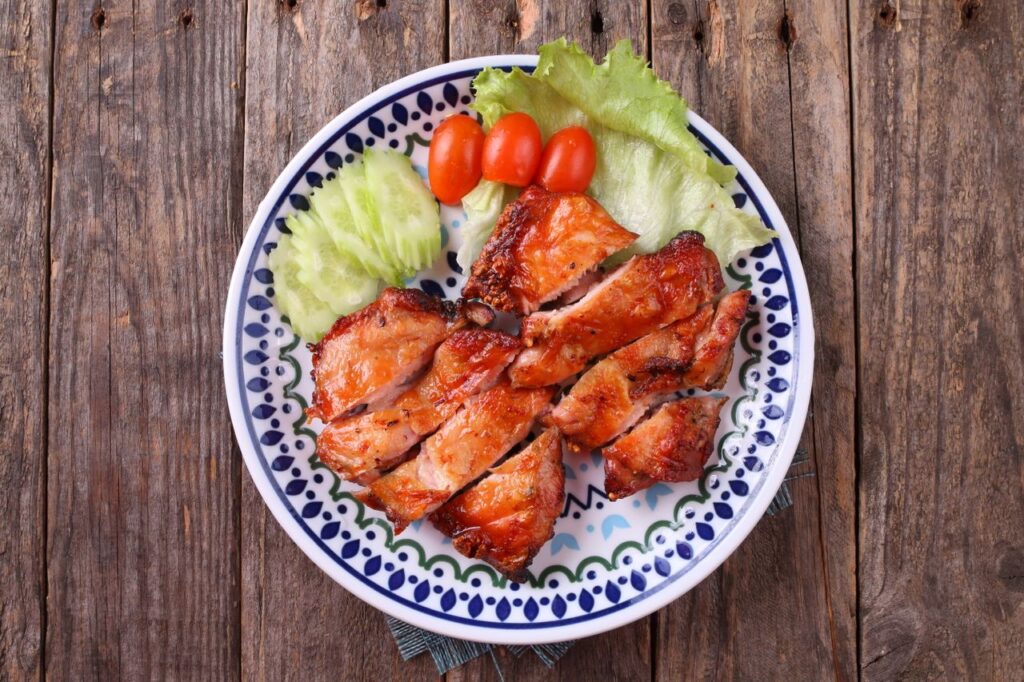
Gai yang is another charcoal-grilled favorite.
The chicken is usually marinated with garlic, coriander, fish sauce and other seasonings before being grilled slowly over charcoal. You’ll often see whole chickens or large pieces hanging beside the grill.
The skin picks up smoky, slightly charred flavors while the meat stays juicy when cooked properly.
I like eating it with sticky rice and a spicy dipping sauce.
Typical price: ฿60–฿150 per portion
Best time: Evening
Look for: Chicken being grilled continuously rather than sitting under a heat lamp
This is especially good if you’ve already ordered something spicy. The grilled chicken gives your mouth a break.
5. Tom Yum Goong
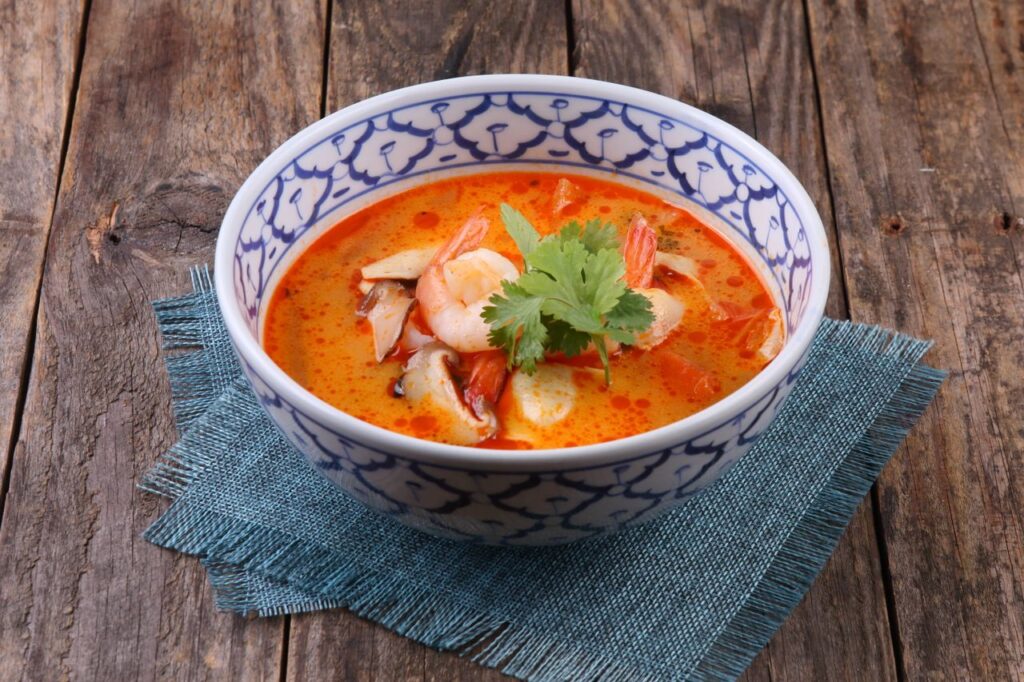
Tom yum is Thailand in a bowl.
The broth combines hot, sour and aromatic flavors with lemongrass, galangal, kaffir lime leaves, chilies and lime. With goong, you get shrimp.
The first spoonful can be surprisingly intense. Then the flavors start making sense: sourness from lime, heat from chili, fragrance from the herbs and savory depth from the broth.
Typical price: ฿100–฿250
Best for: Sharing between two people
Tip: Ask whether the stall serves tom yum nam sai or the richer creamy version.
At night markets, I prefer ordering a small pot for the table rather than trying to eat a huge bowl alone.
6. Gai Tod — Thai Fried Chicken
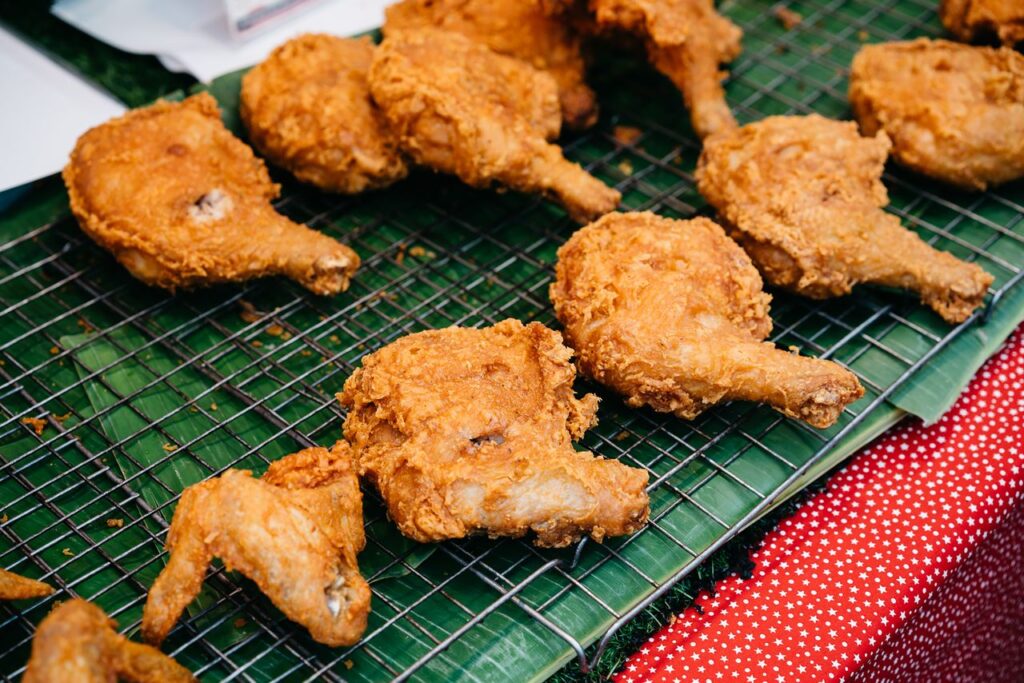
There is something almost unfairly good about Thai fried chicken eaten outdoors at night.
Pieces of chicken are marinated, seasoned and fried until the exterior becomes crisp. Garlic and pepper are often prominent, and some stalls add crispy fried garlic on top.
The best part is the contrast between the crunchy coating and juicy meat.
Typical price: ฿50–฿120
Pair it with: Sticky rice and sweet chili sauce
I’ve found that this is one of the safest dishes to order when traveling with people who don’t want anything too adventurous. Everyone understands fried chicken.
7. Sai Krok Isan — Isan Fermented Sausage
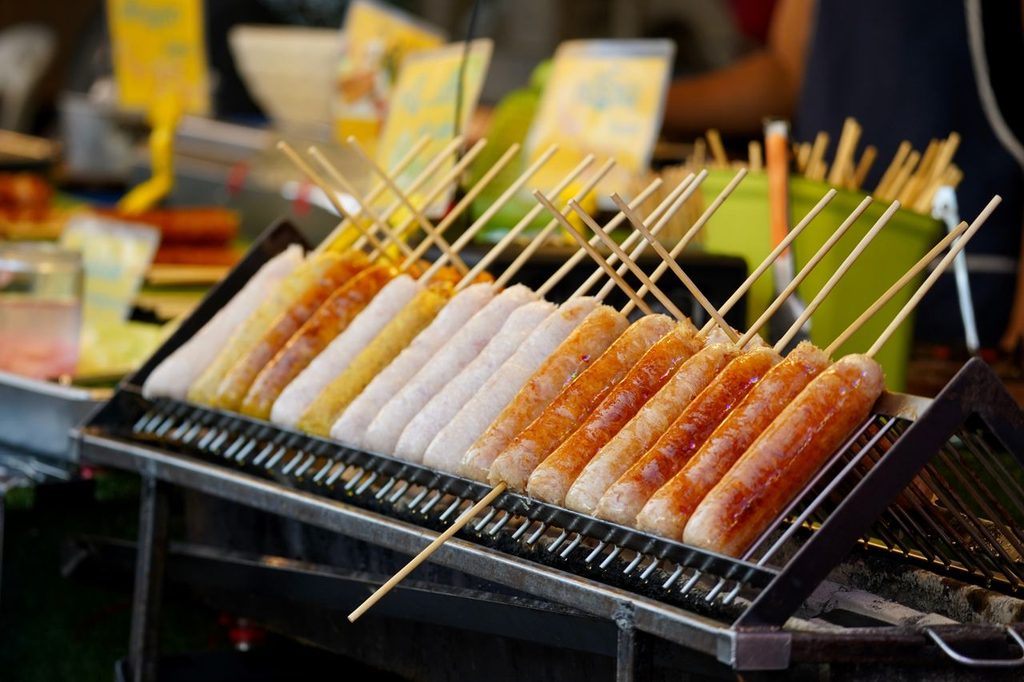
This one deserves a place on the list because it tastes completely different from the sausages many visitors know.
Sai krok Isan is associated with northeastern Thailand and is traditionally fermented, giving it a distinctive tangy flavor. It is commonly grilled and served with raw cabbage, ginger and chilies.
The first bite can be surprising if you’re expecting an ordinary grilled sausage.
Typical price: ฿20–฿50 per portion
Best served with: Fresh ginger and cabbage
Flavor: Smoky, savory and noticeably sour
I wouldn’t order five portions on my first attempt. Get one, try it, and decide whether you want more.
8. Hoy Tod — Crispy Oyster Omelet
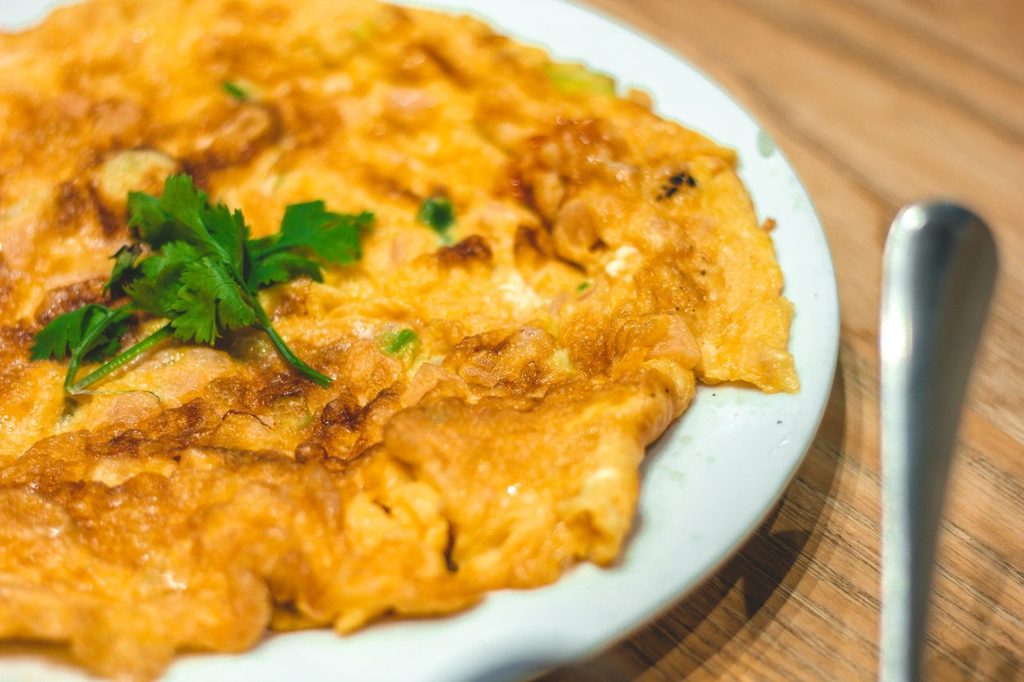
Hoy tod looks like an omelet that has gone to Bangkok and developed an attitude.
The dish combines oysters with egg and a crispy starch batter, usually finished with bean sprouts and a sweet-spicy sauce.
Some versions are soft and gooey, while others are aggressively crispy around the edges.
Typical price: ฿80–฿180
Best time: Evening
My tip: Look for a stall cooking it on a large, hot flat griddle.
Watch how the vendor cooks it. If you see the batter hitting a genuinely hot surface and hear that immediate sizzle, you’re in the right place.
9. Mango Sticky Rice
Eventually, your mouth will need a break from chilies.
That’s when mango sticky rice arrives.
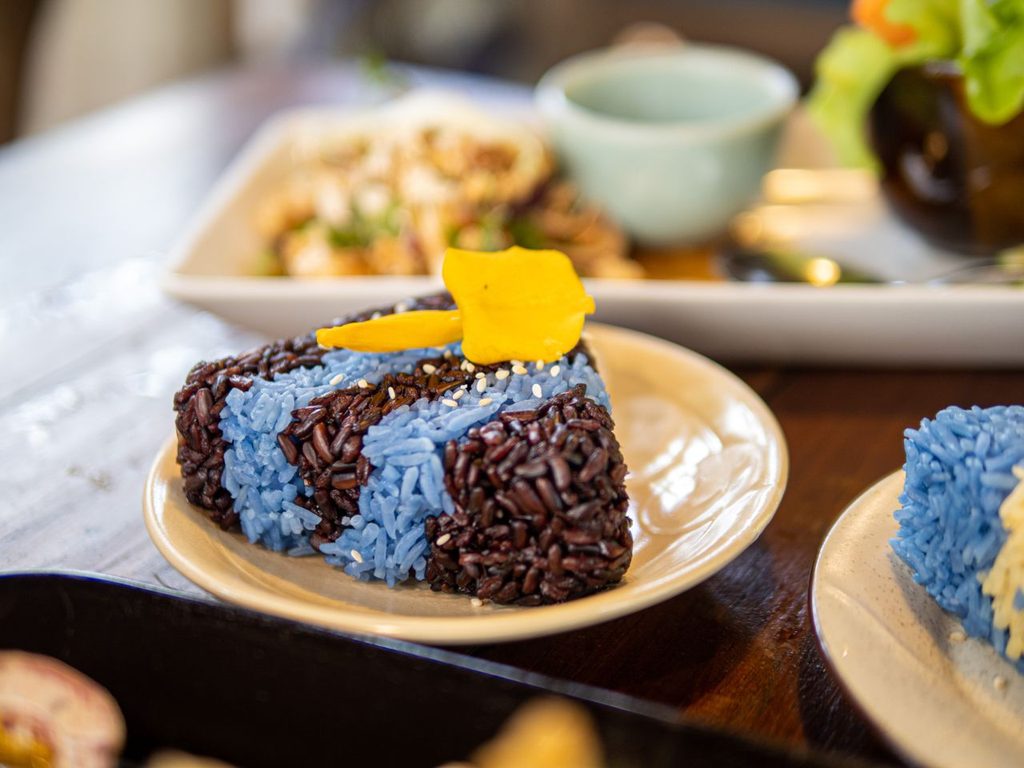
Sweet sticky rice is served with ripe mango and coconut cream. It sounds simple, but when the mango is perfectly ripe and the coconut cream has the right balance of salt and sweetness, it’s one of my favorite Thai desserts.
Typical price: ฿60–฿150
Best time: Whenever you see good mango
Tip: Look for freshly cut mango rather than trays that have clearly been sitting out for hours.
This is also one of the easiest street foods to share.
10. Roti Gluay — Thai Banana Roti
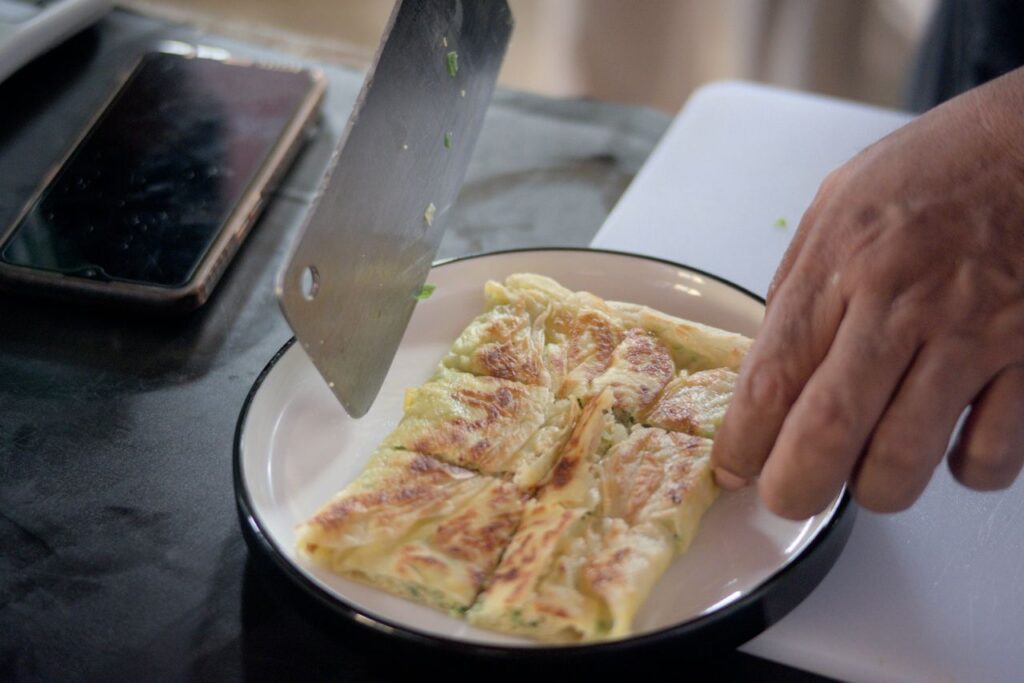
If you hear metal spatulas clattering against a hot griddle, there’s a decent chance someone nearby is making roti.
The dough is stretched extremely thin, filled with sliced banana, folded into a square and fried until golden. Condensed milk is usually drizzled over the top, with sugar sometimes added as well.
It’s crispy, buttery, sweet and completely unnecessary after dinner—which is exactly why I order it.
Typical price: ฿40–฿80
Best topping: Banana with condensed milk
Best time: Late evening
I usually share one. They’re much heavier than they look.
Where I Would Go for These Foods
Not every night market has the same food selection, so I wouldn’t treat all markets as interchangeable.
Yaowarat — Chinatown
Chinatown Night Market
If food is the main reason you’re going out, Yaowarat is my first choice.
After sunset, the streets become packed with food stalls, restaurants and people moving between them. It’s technically not a single enclosed night market, but for eating, it functions like one enormous nighttime food district.
Go hungry.
I’d arrive around 5:30–6:00 PM and walk before committing to a full meal. That way you can see what looks freshest instead of ordering the first thing you smell.
Jodd Fairs Ratchada
Jodd Fairs Ratchada
Jodd Fairs Ratchada is currently open daily, with current listings showing roughly 5:00 PM to 1:00 AM. It’s particularly convenient because it’s near MRT Thai Cultural Centre.
This is where I’d go if I wanted food plus shopping, drinks and a lively atmosphere without making the evening complicated.
It’s popular, so don’t expect a quiet local market. You’re coming here for energy.
Train Night Market Srinagarindra
Train Night Market Srinagarindra
For a bigger, more sprawling evening, I like Train Night Market Srinagarindra.
Current listings show it operating Thursday through Sunday, generally from around 5:00 PM into the night.
It’s farther from central Bangkok, but the atmosphere is worth the trip if you enjoy browsing vintage items, bars and food stalls in the same evening.
Asiatique The Riverfront
Asiatique The Riverfront
Asiatique is more polished and tourist-friendly than the other markets on this list. It sits beside the Chao Phraya River and combines restaurants, stalls, shopping and entertainment.
I wouldn’t choose it specifically for the cheapest street food, but it’s a good option if you want an easier evening with friends or family.
How Much Should You Budget?
You don’t need a huge food budget to have a serious night-market dinner.
For one person, I’d usually allow ฿300–฿600 for a good street-food crawl.
For example:
| Food | Approx. Price |
|---|---|
| Moo ping + sticky rice | ฿60–฿100 |
| Som tam | ฿60–฿80 |
| Gai yang | ฿80–฿120 |
| Pad Thai | ฿70–฿100 |
| Mango sticky rice | ฿70–฿100 |
| Water | ฿10–฿30 |
| Total | Around ฿350–฿530 |
Prices vary by location, portion size and ingredients. Tourist-heavy areas can charge more than neighborhood stalls.
And honestly, I don’t mind paying an extra ฿20 or ฿30 for something that’s cooked fresh in front of me.
A Few Street-Food Rules I Actually Follow
Watch the turnover. If a stall has a steady line, ingredients probably aren’t sitting untouched for hours.
Eat food that’s cooked hot. Especially with meat and seafood, I prefer seeing it go directly from grill or wok to plate.
Carry small cash. Many stalls still prefer cash, and having ฿20, ฿50 and ฿100 notes makes transactions much easier. Current Bangkok night-market guides specifically recommend bringing cash because many stalls don’t accept cards.
Don’t order too much at once. Bangkok night markets are designed for grazing. One portion of everything sounds exciting until you’ve eaten three full plates and still have six dishes waiting.
Ask about spice. “Mai phet” means not spicy. “Phet nit noi” means a little spicy.
Drink bottled water. Thailand’s heat, chili and walking combination can sneak up on you.
And don’t be embarrassed to point at food.
Sometimes the most effective ordering strategy is simply watching what the person in front of you gets and saying, “เอาอันนี้ครับ” (“I’ll have this one”)—or “เอาอันนี้ค่ะ” if you’re a woman.
My Ideal Bangkok Night-Market Food Crawl
If I had one evening purely for eating, I’d start around 5:30 PM.
I’d walk through Yaowarat first without buying anything substantial. I’d find a busy moo ping stall, grab a couple of skewers and sticky rice, then keep walking.
Next would be som tam—but I’d order it medium spicy rather than trying to prove something to a Thai vendor.
Then gai tod or gai yang.
After that, I’d share a plate of crispy hoy tod.
I’d finish with mango sticky rice or banana roti.
By then, I’d probably be too full to move quickly, which is when wandering through the market becomes part of the experience rather than something to get through.
That’s what I like most about Bangkok night markets. There isn’t really a correct way to do them.
You don’t need a reservation, a tasting menu or a perfectly planned itinerary. You need comfortable shoes, a little cash and enough curiosity to stop whenever something smells incredible.
The best dish of the night might be the one you never planned to try.
And in Bangkok, that’s usually how the good food stories begin.