
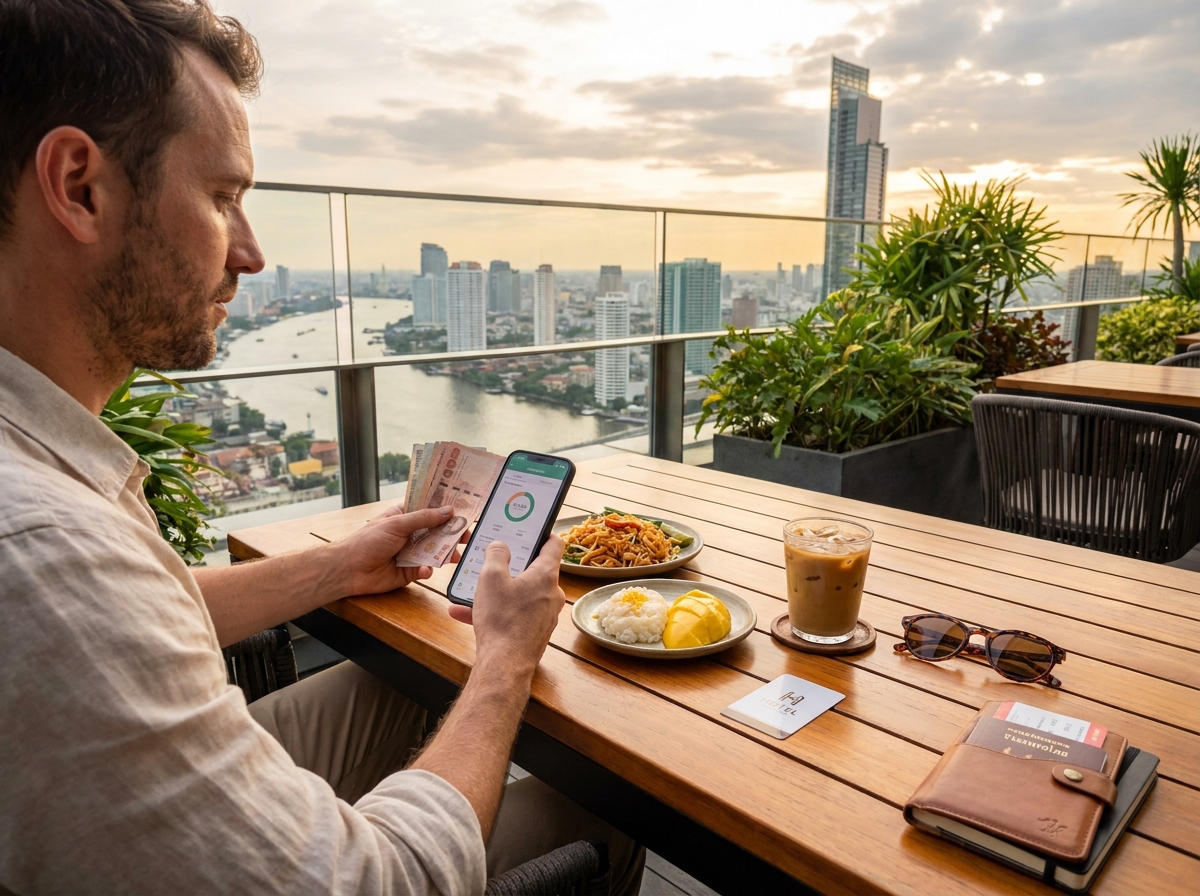
Thailand can be wonderfully cheap—or surprisingly expensive.
I’ve had days in Thailand where I spent less than the price of a single airport meal back home, and I’ve also had evenings where one nice dinner, cocktails and a Grab ride quietly destroyed the day’s budget. That’s the thing about Thailand: the country itself isn’t necessarily expensive. Your travel style decides how expensive it becomes.
For a seven-day trip, I’d personally budget around ฿20,000–฿35,000 per person, excluding international flights, if I wanted a comfortable trip without constantly checking my wallet.
Budget travelers can manage closer to ฿10,000–฿16,000, while a premium trip can easily reach ฿50,000–฿80,000 or more.
For reference, the Bank of Thailand’s exchange-rate data showed around ฿32.74 per US$1 on August 21, 2026, so ฿20,000 is roughly US$610 and ฿35,000 roughly US$1,069 at that rate. Exchange rates move daily, so I wouldn’t build a trip around an exact dollar conversion.
6
The Realistic Seven-Day Thailand Budget
Here’s the number I’d use when planning.
| Travel style | Daily budget | 7-day budget | Approx. USD |
|---|---|---|---|
| Backpacker | ฿1,400–฿2,300 | ฿9,800–฿16,100 | $300–$490 |
| Comfortable | ฿2,900–฿5,000 | ฿20,300–฿35,000 | $620–$1,070 |
| Premium | ฿7,000–฿11,500+ | ฿49,000–฿80,500+ | $1,500–$2,460+ |
These figures exclude international airfare.
Current 2026 travel-cost estimates broadly put budget travel around US$35–$55 per day and comfortable travel around US$115–$145 per day, depending heavily on accommodation and activities.
I think the ฿20,000–฿35,000 range is the sweet spot for a first-time visitor who wants a proper hotel, good Thai food, attractions, local transportation and a little room for spontaneous spending.
Accommodation: Where Most of Your Money Goes
Accommodation is the biggest variable in a Thailand budget.
You can sleep extremely cheaply if you’re willing to use hostels, but the difference between a basic guesthouse and a comfortable hotel isn’t always enormous.
For a solo traveler, I’d roughly allow:
- Hostel dorm: ฿300–฿700 per night
- Simple private room: ฿700–฿1,500
- Comfortable 3–4 star hotel: ฿1,500–฿3,500
- Upscale hotel: ฿3,500–฿7,000+
- Luxury resort: ฿7,000–฿15,000+
Bangkok generally gives you a wider range of hotels, while Chiang Mai can offer excellent value for comfortable accommodation. Current Thailand travel estimates also note that Chiang Mai can be substantially cheaper than Bangkok for everyday travel expenses.
If you’re traveling as a couple, accommodation becomes much easier to justify because you split the room cost.
For example, a ฿2,400 hotel room is ฿1,200 each for two people. That’s one reason Thailand can feel considerably cheaper for couples than solo travelers.
My hotel rule
I don’t automatically book the cheapest room.
I’ll happily pay an extra ฿500–฿800 per night for:
- A good location
- Reliable air conditioning
- A proper shower
- Strong reviews
- Easy access to BTS/MRT or major attractions
- A comfortable bed
Saving ฿200 isn’t worth it if I spend an hour every day commuting.
Food: You Can Eat Cheaply Without Eating Badly
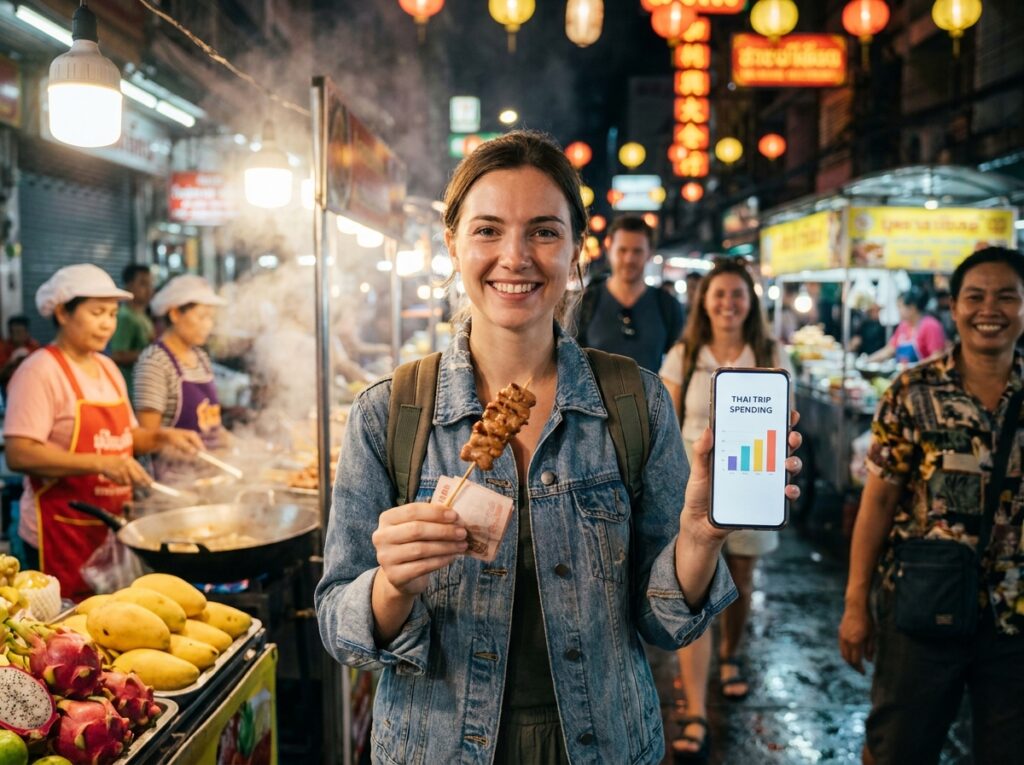
Thailand is one of my favorite countries for food budgeting because cheap doesn’t automatically mean terrible.
A local Thai rice or noodle dish can still be excellent.
A realistic food budget might look like this:
| Meal | Typical cost |
|---|---|
| Local breakfast | ฿40–฿100 |
| Street-food lunch | ฿50–฿120 |
| Casual restaurant | ฿100–฿250 |
| Coffee | ฿50–฿120 |
| Nice dinner | ฿300–฿800+ |
| Cocktails | ฿250–฿500+ |
If I’m traveling on a budget, I can eat comfortably for around ฿250–฿400 per day.
With cafés, western restaurants, cocktails and nicer dinners, I’d budget ฿700–฿1,200+ per day.
The biggest budget mistake is eating exclusively in tourist areas.
I’ve paid more for a basic pad kra pao near a major tourist attraction than I paid for a much better meal five minutes down a side street.
My favorite strategy is simple: walk one or two streets away from the main attraction and look for restaurants filled with Thai customers.
Transportation: Surprisingly Manageable
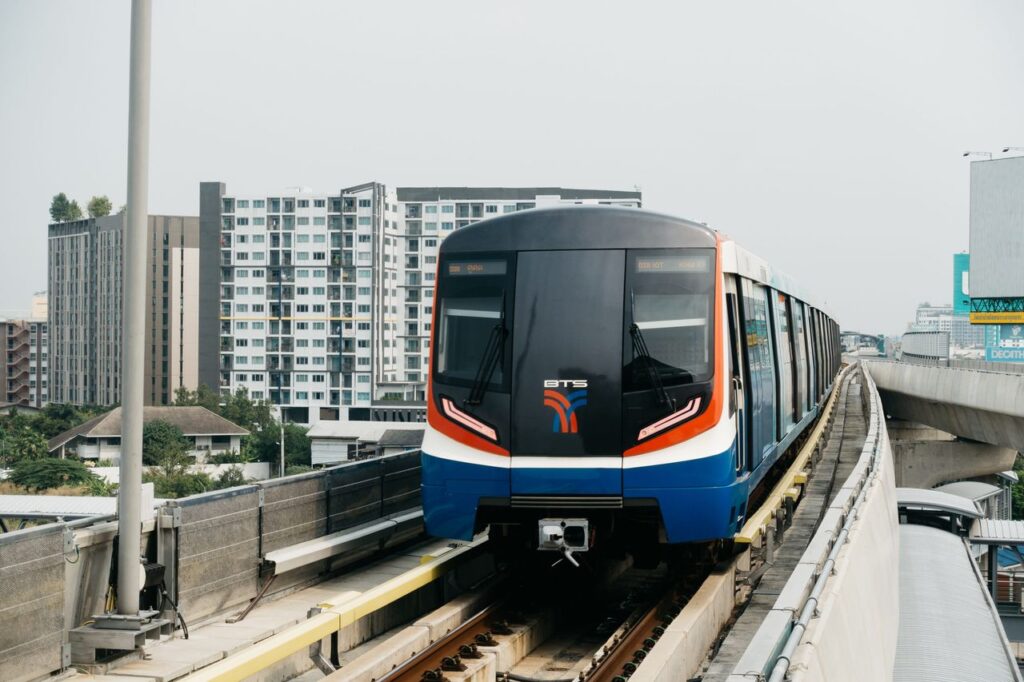
Transportation doesn’t usually destroy a Thailand budget unless you rely heavily on private cars and taxis.
In Bangkok, the BTS Skytrain and MRT are my first choices. They’re fast, air-conditioned and save you from sitting in traffic.
For shorter journeys:
- BTS/MRT: roughly ฿17–฿70+ depending on route
- Motorbike taxi: often ฿20–฿100+
- Grab/Bolt: varies significantly by distance and demand
- Meter taxi: often inexpensive compared with Western cities
- Chao Phraya river boats: inexpensive for many central Bangkok journeys
The important thing is not to compare every journey with the absolute cheapest option.
If I’m exhausted after walking around temples for six hours, spending ฿120 on a Grab instead of changing trains twice isn’t exactly a financial disaster.
How Much Should You Budget for Attractions?
This is where Thailand remains attractive for travelers.
Many temples are free or inexpensive, while major attractions can cost considerably more.
For a typical sightseeing day, I’d set aside around ฿300–฿1,000 for entrance fees and small activities.
You might spend:
- ฿50–฿200 on temple admission
- ฿200–฿500 on a major attraction
- ฿300–฿1,000+ on a guided activity
- ฿1,000+ for premium tours or excursions
The Tourism Authority of Thailand maintains current destination and attraction information, so I check its official resources when building an itinerary.
The trick is not to book an expensive tour for every single day.
Pick two or three experiences that genuinely matter to you and keep the other days flexible.
What About Bangkok to Chiang Mai?
If you’re spending seven days across Bangkok and Chiang Mai, transportation between the two cities needs to be included.
You have two obvious choices: fly or take the overnight train.
Flights can be very reasonable when booked early, while the sleeper train gives you the added benefit of replacing one hotel night with transportation.
For my own itinerary, I’d seriously consider the overnight sleeper train if I had enough time.
You leave Bangkok in the evening, sleep while traveling north and wake up in Chiang Mai.
That can make the transportation cost feel much more worthwhile than simply paying for a flight and another hotel night.
If you’re using domestic flights, remember that the headline fare isn’t always the final price. Checked baggage, seat selection and airport transportation can add up.
A Realistic 7-Day Thailand Itinerary
If this were my first week in Thailand, I’d keep the itinerary relatively simple.
Days 1–3: Bangkok
I’d spend the first three days around Bangkok.
Think:
- Grand Palace
- Wat Pho
- Wat Arun
- Chinatown
- Local markets
- Shopping
- Rooftop views
- Thai massage
- One good evening meal
I’d budget around ฿2,500–฿4,500 per day, depending on the hotel and restaurants.
Day 4: Travel North
Take a flight or overnight sleeper train to Chiang Mai.
If flying, budget perhaps ฿1,000–฿3,500+ for the flight depending on the date, baggage and how early you book.
If taking a sleeper train, the cost varies by train and berth, but it can be an excellent way to combine transportation and accommodation.
Days 5–7: Chiang Mai
I’d slow down here.
Visit:
- Old City temples
- Doi Suthep
- Local markets
- Night Bazaar
- Cafés
- Northern Thai restaurants
- One countryside or nature excursion
A comfortable Chiang Mai day can often be done for around ฿1,500–฿3,000, excluding a major private tour.
This is where Thailand starts feeling particularly good value.
Example: My Comfortable ฿30,000 Budget
If I had ฿30,000 for seven days, excluding international flights, I’d divide it approximately like this:
| Category | 7-day allowance |
|---|---|
| Hotels | ฿12,000 |
| Food & drinks | ฿7,000 |
| Local transport | ฿2,500 |
| Domestic transportation | ฿3,000 |
| Attractions | ฿2,500 |
| Massage / entertainment | ฿1,500 |
| Emergency / spontaneous spending | ฿1,500 |
| Total | ฿30,000 |
That’s not a luxury vacation, but it is absolutely enough for a comfortable trip.
I’d stay in decent hotels, eat plenty of Thai food, use public transportation when convenient, take Grab when it makes sense and still have enough money for massages, attractions and the occasional nice dinner.
How to Travel Thailand for Under ฿15,000
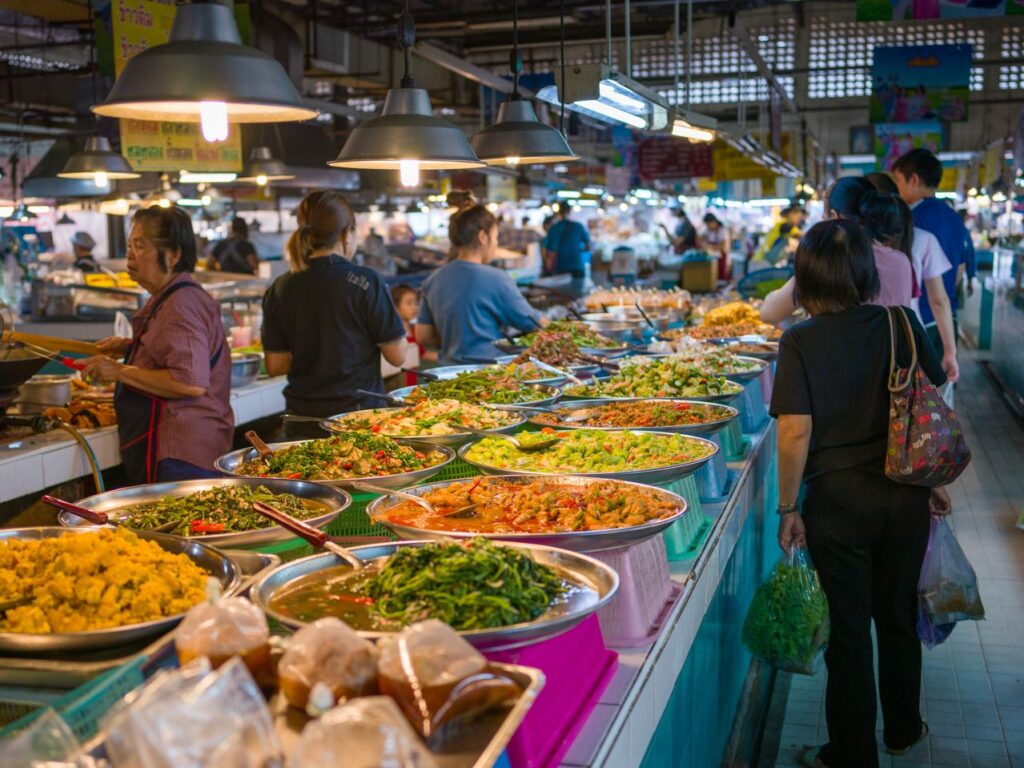
It is possible, but you have to be deliberate.
I’d do something like:
Accommodation: ฿4,500
Food: ฿3,000
Transport: ฿2,000
Attractions: ฿1,500
Miscellaneous: ฿1,000
Total: ฿12,000
The trick is choosing one or two destinations rather than trying to see the entire country.
Stay in hostels or cheap guesthouses.
Eat local food.
Use buses, trains, BTS and MRT.
Avoid expensive beach resorts.
Skip private tours.
And don’t spend ฿250 on cocktails every night and then complain that Thailand is expensive.
How Much Cash Should You Carry?
I don’t walk around Thailand carrying my entire travel budget.
I’d usually carry around ฿1,000–฿2,000 in cash for the day and keep the rest secured elsewhere.
Cash is still useful for street food, smaller restaurants, markets, taxis, temple donations and small shops.
Cards are increasingly useful in hotels, shopping malls, larger restaurants and many modern businesses, but I wouldn’t depend exclusively on a card.
I’d also keep some emergency cash separate from my wallet.
Don’t Forget These Hidden Costs
The daily budget is easy to calculate. The annoying expenses are the ones people forget.
Things like:
- Airport transfers
- Checked baggage
- SIM/eSIM
- ATM fees
- Travel insurance
- Laundry
- Hotel deposits
- Tips
- Tours
- Alcohol
- Souvenirs
- Last-minute transportation
These can easily add another ฿2,000–฿5,000 to a seven-day trip.
And if you’re traveling during a major holiday or peak season, hotel prices can change dramatically.
That’s why I wouldn’t plan a Thailand trip with exactly ฿20,000 in my bank account and no backup.
Give yourself breathing room.
The Biggest Ways I Save Money in Thailand
I don’t try to save money on everything.
Instead, I save money where I don’t care and spend it where I do.
I’ll take the MRT instead of a taxi.
Then I’ll spend ฿500 on an excellent dinner.
I’ll stay in a ฿1,800 hotel instead of a ฿4,000 luxury room.
Then I’ll spend ฿1,000 on an experience I’ll remember.
I’ll eat street food for lunch.
Then I’ll have a proper restaurant dinner.
That balance makes Thailand much more enjoyable than trying to maintain the absolute lowest possible daily budget.
So, How Much Money Do You Really Need?
For seven days in Thailand, ฿15,000 can work for a careful budget traveler, ฿25,000–฿35,000 is a very comfortable range for many travelers, and ฿50,000+ gives you considerably more freedom.
If you’re flying internationally, add airfare separately because the starting point makes an enormous difference.
For a first-time visitor from the United States, I’d personally aim for around ฿30,000 per person excluding international flights.
That gives me enough room to enjoy Thailand rather than constantly calculate whether I can afford the next meal.
And that’s really the secret.
Thailand is inexpensive when you travel like a local, but it becomes expensive surprisingly quickly when you combine premium hotels, imported food, private transportation, alcohol and organized tours every day.
You don’t need to choose between backpacking and luxury.
The sweet spot is somewhere in the middle: a comfortable room, excellent local food, public transportation when it makes sense, a few memorable experiences and enough spare cash to say “yes” when an interesting opportunity appears.
That’s the Thailand budget I’d rather travel with.