

What I Wish I Knew Before Opening My First Bank Account in Thailand
Opening a bank account in Thailand sounds simple enough when you first start researching expat life, remote work, retirement abroad, or a longer business stay. But the reality is that Thai banking has its own rules, documentation standards, digital verification quirks, and branch-by-branch differences that can surprise even experienced travelers from the United States. If you are used to opening accounts quickly with a Social Security number, a U.S. address, and a few taps in a banking app, Thailand may feel refreshingly convenient in some ways and confusing in others.
What I wish I knew before opening my first bank account in Thailand is that the process is not just about money. It touches immigration status, local address registration, proof of income, mobile phone verification, tax considerations, remittance strategy, online banking security, and even how you plan to move funds between the U.S. and Thailand. For anyone managing international finances, a Thai bank account can be a practical tool, but it helps to understand the full picture before walking into a branch.
Why Opening a Thai Bank Account Matters More Than You Think
For U.S. citizens living, working, investing, or retiring in Thailand, a local bank account can make everyday life much easier. It can help you pay rent, manage utility bills, receive salary, handle visa-related financial requirements, and reduce dependence on cash or international card fees. In some cases, it can also make business operations smoother if you are launching a company, working with local vendors, or setting up recurring payments for services like insurance, legal consulting, cloud software, or digital marketing tools.
A Thai bank account can also simplify personal finance management. Instead of paying foreign transaction fees every time you use a U.S. debit card, you can keep funds in Thai baht and separate your local spending from your long-term investment portfolio back home. For people who work remotely in fields like AI consulting, software development, cybersecurity, e-commerce, or content marketing, this separation can be especially useful for budgeting and tax tracking.
The Biggest Surprise: Opening an Account Is Not Always the Same at Every Branch
One of the first things that surprised me was how much the experience depends on the branch, the bank, and even the staff member helping you. In the U.S., banks tend to follow more standardized procedures. In Thailand, the official requirements may be similar on paper, but practical enforcement can vary widely.
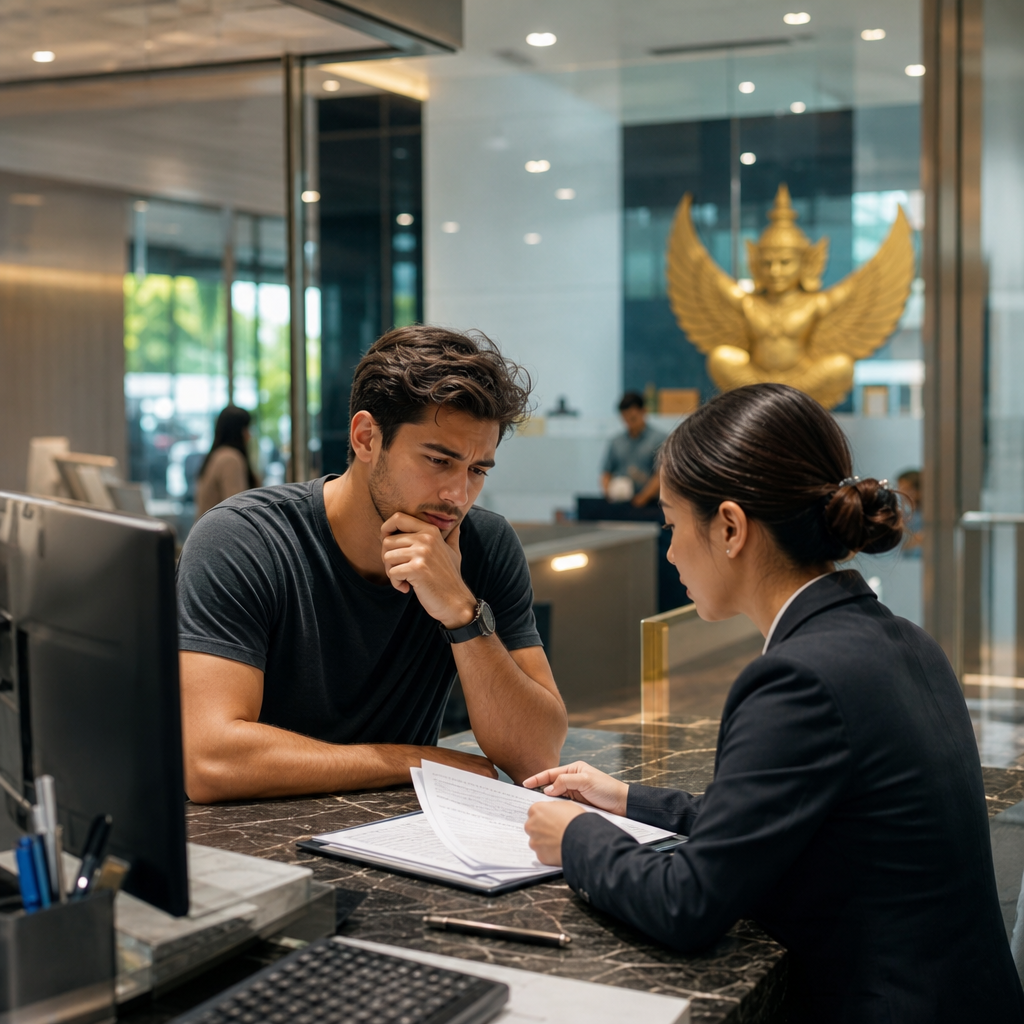
Some branches are comfortable opening accounts for foreigners with a passport and visa. Others may want a work permit, a certificate of residence, a long-term visa, or a local reference. Some branches are friendly to digital nomads and retirees. Others prefer customers with employment in Thailand or more traditional immigration status. This inconsistency can be frustrating, but it also means persistence matters.
Here is a simple comparison of what many foreigners experience:
| Factor | U.S. Banking Experience | Thailand Banking Experience |
|---|---|---|
| Documentation | Usually standardized | Often branch-dependent |
| Account opening speed | Often same-day | Can be same-day or delayed |
| Visa importance | Usually not relevant | Very important |
| Digital onboarding | Common | Improving, but not universal |
| Foreign customer flexibility | High | Mixed by bank and branch |
The lesson here is simple: if one branch says no, that may not mean every branch will say no.
What Documents I Wish I Had Prepared in Advance
If you are planning to open a bank account in Thailand, preparation can save you a lot of time. The exact requirements vary, but most foreigners should be ready with several forms of identification and supporting documentation.
In many cases, banks may ask for:
A valid passport
A visa with sufficient duration
A Thai phone number
Proof of local address, such as a lease or residence certificate
An employment contract, work permit, or business registration documents if applicable
A letter from your embassy, landlord, or immigration office in some cases
An initial deposit in cash or transfer form
For U.S. citizens, having a clean paper trail is particularly helpful if you also need to manage U.S. tax reporting, foreign account disclosures, or cross-border transfers. If you are self-employed, run a consultancy, or own a business related to marketing, insurance, legal services, or cloud computing, bring documents that explain your source of funds. Banks increasingly care about anti-money-laundering compliance and know-your-customer rules, so the more organized your paperwork is, the smoother the process will be.
Why Your Visa Status Can Make or Break the Process
This was one of the most important lessons. In Thailand, your visa status often determines whether a bank will open an account for you at all. Some banks are comfortable with tourist-related status in certain situations, while others require a non-immigrant visa, retirement visa, education visa, marriage visa, or employment documentation.
If you are a U.S. traveler planning a short stay, you may find it difficult to open an account unless you have additional local ties. If you are relocating for work, retiring, or starting a business, the process is usually more manageable. It is also worth understanding that immigration status can affect not just account opening but sometimes access to mobile banking, debit cards, and online verification services.
This is especially important if you are building a long-term financial life abroad. Banking, insurance planning, investment transfers, and even loan applications are often tied to stable residency status. In other words, your visa is not just an immigration issue; it is a banking issue too.
Cash Is Still Important, Even in a Digital Economy
Many Americans assume that global cities are fully cashless by now. Thailand is modern in many ways, but cash still matters. Yes, QR code payments and mobile banking are widely used in many places, especially in major cities. But as a foreigner, you may still encounter situations where cash is the simplest or only practical option.
This became obvious to me very quickly when dealing with small shops, local transport, street food, casual services, and some landlords. Having a Thai bank account makes it easier to withdraw local currency without relying on expensive foreign ATM fees, but you will still want a backup cash strategy.
A useful approach is to think of Thai banking as part of a broader financial system that includes cash, digital wallets, international cards, and online transfer services. That diversified approach is similar to how businesses manage risk in insurance, cloud infrastructure, or cybersecurity. You do not rely on one system alone.
The Hidden Cost of Foreign Transactions
One of the most annoying parts of banking as a U.S. citizen abroad is how quickly fees can stack up. Foreign transaction fees, ATM surcharges, exchange rate markups, wire transfer costs, and intermediary bank fees can quietly reduce your money every month. If you are moving funds frequently between the U.S. and Thailand, the cost difference can be meaningful.
A Thai bank account can lower some of these costs, especially for local spending. But you should still compare the total cost of maintaining money abroad versus keeping everything in a U.S. account. That means looking at exchange rates, remittance services, international wire pricing, and your banking relationship on both sides.
Simple Cost Comparison Overview
| Transaction Type | Typical U.S. Card Use in Thailand | Thai Bank Account Use |
|---|---|---|
| Cash withdrawals | Often includes foreign ATM fee | Lower local withdrawal friction |
| Retail purchases | May include foreign transaction fee | Usually no foreign fee for local spend |
| Bill payments | Often difficult or impossible | Easier with local banking access |
| International transfers | Can be expensive | Still needs planning, but more flexible |
| Ongoing subscription payments | May fail or trigger fraud alerts | More stable for local services |
For frequent travelers, freelancers, and entrepreneurs, reducing friction in payment processing can improve cash flow management and make financial forecasting more reliable.
Why Mobile Banking Apps Matter as Much as the Branch Experience
In Thailand, the account opening experience is only part of the story. What matters just as much is whether the bank’s mobile app works well for your needs. Some Thai banks have excellent apps with QR payments, balance checking, transfers, and account management. Others are more limited, especially for foreigners who may face extra authentication steps or device registration issues.
Before you choose a bank, consider whether you need:
Reliable mobile transfers
International card support
QR payment compatibility
Easy login and biometric security
English-language app features
Customer service that can help with app setup
If you rely on tech-heavy work, such as SaaS operations, digital marketing campaigns, or cloud-based business management, mobile banking reliability can become part of your operational infrastructure. In 2026, financial convenience and cybersecurity go hand in hand. A bank app that is easy to use but weak on protection is a risk. A secure app with poor usability can also be frustrating. The goal is balance.
The Security Side I Wish I Understood Better
Banking in a foreign country is not only about access. It is also about security. As soon as you open a bank account, you are dealing with local SIM cards, app logins, SMS verification, identity checks, and sometimes public Wi-Fi risks. This is where cybersecurity awareness becomes essential.
A U.S. audience may be especially sensitive to fraud prevention, identity theft, and account protection. Those concerns are valid. In Thailand, you should take the same precautions you would take anywhere else, and maybe even more. Use strong passwords, enable two-factor authentication where possible, avoid logging in on unsecured public networks, and never share verification codes.
If you are a business owner or consultant dealing with high-value payments, protecting your banking access is as important as buying cyber liability insurance for your company. Financial cyber risk is real, and overseas banking adds another layer of complexity. This is one reason many expats and remote professionals now use password managers, VPNs, and separate devices for sensitive financial activity.
How Language Differences Can Affect the Entire Process
Even in major Thai cities, banking conversations may not always be effortless if you are relying on English alone. Some branches have English-speaking staff, but not all. Forms may be partially in Thai. Instructions may be simplified, but still ambiguous. And when something goes wrong, the nuances matter.
This is where patience pays off. If you can bring a Thai-speaking friend, translator, or employer representative, the process may become much easier. If not, it helps to prepare a few key phrases and to keep your documents organized. Many foreigners discover that being calm, polite, and consistent matters almost as much as the paperwork itself.
In a broader sense, this is a lesson in cross-cultural financial management. Whether you are discussing banking, insurance claims, employment contracts, or legal services, clear communication reduces errors and delays.
What I Wish I Knew About Minimum Balances and Account Maintenance
Another detail that often gets overlooked is account maintenance requirements. Some banks may require minimum balances to avoid fees or to keep the account in good standing. Others may have monthly service charges, debit card replacement fees, or extra costs for certain transaction types.
This is not always a big issue, but it matters if you plan to keep only a modest amount in the account. If your goal is simply to pay rent and local expenses, a bank with lower maintenance costs may be better than one with more prestige. If you are building a long-term base in Thailand and using the account for business, retirement income, or investment transfers, then service quality and branch support may matter more.
Practical Bank Selection Snapshot
| Need | Best Feature to Prioritize |
|---|---|
| Low monthly cost | Minimal fees and low balance requirements |
| Frequent local payments | Strong QR and mobile transfer support |
| Business use | Reliable compliance and branch support |
| International transfers | Better foreign remittance options |
| Security | Strong app authentication and fraud controls |
| English support | Accessible staff and clear documentation |
Why U.S. Tax and Reporting Rules Still Matter
Many Americans assume that once they open a foreign bank account, the issue is purely local. It is not. U.S. citizens are still subject to American tax and reporting obligations, including potential foreign account disclosures depending on balance and circumstances. That means your Thai bank account may need to be considered in your U.S. tax filings, especially if you hold significant balances or use the account for business.
This is one area where professional tax and legal services can be worth the money. If you are moving income between countries, receiving client payments, holding investments, or managing corporate funds, you should understand how foreign accounts interact with U.S. reporting rules. The same is true if you are using the account to support a broader asset strategy involving stocks, bonds, retirement accounts, or real estate financing.
A Thai bank account can be a powerful tool, but it is not something to treat casually if you are a U.S. taxpayer.
The Role of Online Transfers, FX, and Cross-Border Money Strategy
One thing I underestimated was how much thought goes into international transfers. Opening a local account is only part of the equation. You also need a smart method for moving money between the United States and Thailand in a way that minimizes fees and delays.
Depending on your situation, you may use bank wires, remittance platforms, multi-currency fintech accounts, or a combination of methods. The right choice depends on transfer frequency, urgency, exchange rates, and compliance requirements. If you receive business income in the U.S. and spend in Thailand, or vice versa, you need a transfer strategy that is efficient and well-documented.
This is especially relevant for people in business, consulting, online commerce, or remote work. It can also matter for investment funding, property purchases, and insurance premium payments. A better transfer setup can preserve capital over time, just like a careful loan structure or investment allocation can improve financial outcomes.
My Biggest Regret: Not Asking Enough Questions Up Front
If I could go back, I would have asked more direct questions before I opened my first Thai bank account. I would have asked whether foreigners at that branch could receive an ATM card immediately, whether mobile banking setup required a specific phone number, whether international transfers were easy, whether there were minimum balance rules, and whether the bank had a strong English support process.
I also would have asked how the bank handles account freezes, dormant accounts, name matching issues, and security alerts. These are the kinds of details that become very important later.
Here is a quick visual summary of the biggest lessons:
What I Wish I Knew Earlier
| Topic | What I Learned |
|---|---|
| Documentation | Bring more than you think you need |
| Visa status | It often determines everything |
| Branch differences | One branch can say yes while another says no |
| Digital banking | App quality matters a lot |
| Fees | Small costs add up fast |
| Security | Treat banking like a cybersecurity issue |
| U.S. obligations | Foreign accounts still matter for tax purposes |
Final Thoughts: A Thai Bank Account Can Be a Smart Move If You Prepare
Opening a bank account in Thailand can be a great move for Americans who are living, working, retiring, or doing business there. It can reduce fees, improve convenience, and give you more control over local spending. But it is not something to approach casually. The process is influenced by visa status, branch policy, documentation, digital security, and your broader financial life across borders.
If you are planning to build a stable presence in Thailand, think of your bank account as part of a larger personal and business finance system. That system may include insurance planning, tax compliance, legal documentation, loan strategy, investment accounts, cloud-based accounting tools, and cybersecurity protection. The better you prepare, the smoother everything becomes.
What I wish I knew before opening my first bank account in Thailand is that the account itself is only the beginning. The real value comes from understanding how it fits into your lifestyle, your income, your reporting obligations, and your long-term financial goals. Once you understand that, Thai banking becomes much less intimidating and much more useful.